Replacing voting machines improves election security and public confidence enough to outweigh its costs
Bottom line (updated 2026-10-28): The case for replacing paperless or very old machines is stronger than the case for replacing every machine. Targeted upgrades make more sense than a full nation-wide change, and new machines do not always build trust.
What's this about?
People disagree about whether new voting machines make elections safe and build trust enough to pay their high cost.
What supporters say
- New machines can replace paperless ones with paper ballots that voters can read and officials can check.
- Old machines may break, lose parts, or lack help from the maker.
- New machines may help voters with a disability or voters who speak other languages.
- In some places, new machines may make voters feel better about the election.
What critics say
- New machines alone cannot secure elections because safety also needs safe code, nets, and trained staff.
- Spending on machines may take money from better steps, such as checks, staff training, and safe election nets.
- Studies show mixed results about whether new machines make people trust elections more.
- Buying, setting up, testing, and teaching staff to use new machines can cost a lot.
How to read this
The number of points on each side does not show who is right; the strength of the proof matters more.
The bottom line
The case for replacing paperless or very old machines is stronger than the case for replacing every machine. Targeted upgrades make more sense than a full nation-wide change, and new machines do not always build trust.
The claim that replacing voting machines is worth the cost depends heavily on which machines are replaced and what replaces them. The evidence supports targeted upgrades in vulnerable jurisdictions more clearly than a nationwide replacement campaign.
The case for
The strongest argument concerns paperless or otherwise unauditable machines. Replacing them can restore a voter-readable paper record, giving election officials an independent way to check electronic results. The National Academies has recommended human-readable paper ballots and removing systems that cannot support independent audits. Research on risk-limiting audits also finds that properly maintained paper records can provide strong statistical evidence about whether reported results are accurate. That benefit depends on usable records and on jurisdictions actually conducting appropriate audits, whose rules vary by state. 1
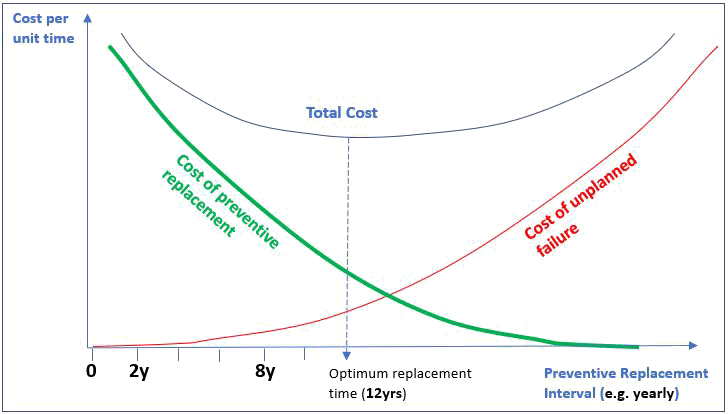
Replacement can also address practical problems caused by aging equipment. Government Accountability Office reviews point to equipment age, compliance with standards, available funding and worker training as important factors in replacement decisions. Other analyses place the expected lifespan of some components at roughly 10 to 20 years, after which discontinued parts and technical support can become difficult to obtain (see Figure 1). 2
Newer systems may improve accessibility for voters with disabilities or language needs, and may offer features that paper-only procedures lack. But those benefits depend on accessible design, trained poll workers and a voter-verifiable paper record. Evidence that new machines improve public confidence is weaker. Some research links machine use with lower trust in election officials and election security, suggesting that visibly obsolete or paperless equipment may damage confidence. 3
The case against
Replacing machines does not, by itself, secure an election. Election security also depends on software, networks, voter-registration systems, staff, procedures, testing, paper-ballot storage, chain of custody and audits. A new machine can still be vulnerable if it is poorly configured, inadequately tested or operated under weak controls. 5
Ballot-marking devices show why newer equipment does not automatically remove software risks. Security experts have warned that compromised software could print a ballot record that does not match the voter’s choices, especially if the voter fails to notice the discrepancy. These systems have also raised concerns about reliability, cost and barcode-based counting. 6
The expected boost in public confidence is similarly uncertain. Research has found that machines can reduce trust, but other studies have found them easier to use and more confidence-inspiring than paper ballots. National evidence also suggests that poll-worker interactions and the wider election-day experience may matter as much as the equipment itself. There is no strong, general comparison showing that replacing machines causes a lasting rise in confidence. 7
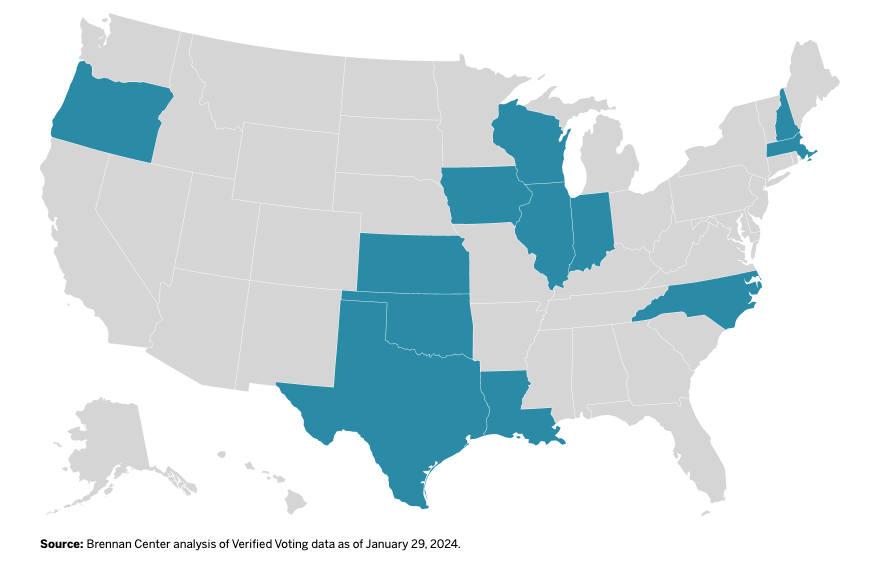
Replacement also carries major costs beyond buying new equipment. Certification, procurement, state approval, integration, storage, maintenance, training and funding all create barriers. Nationwide replacement would cost at least hundreds of millions of dollars, according to the Brennan Center (see Figure 3). Those resources might produce greater security gains if directed toward audits, cybersecurity, registration-system protection, physical security and resilient procedures. This is especially true where existing machines already create auditable paper records (see Figure 1). 89
The bottom line
The evidence favors a risk-based replacement strategy, not universal replacement. The clearest cases are paperless systems, equipment beyond a supportable service life and machines that cannot be independently audited. In 2024, more than 98% of jurisdictions used paper ballots or equipment that produced auditable paper records, changing the policy question from wholesale conversion to targeted diagnosis.
Overall, the claim is not established as a general proposition. Targeted replacement can be justified, but wholesale replacement has not been shown to improve security and public confidence enough to outweigh its full financial and operational costs. Confidence in that conclusion is moderate: the evidence for paper auditability and the risks of aging equipment is stronger than the evidence for a causal confidence gain or a favorable nationwide cost-benefit result. The central uncertainty is whether replacing already auditable systems delivers more security than investing in audits, cybersecurity, staffing and other safeguards.
Pros — Supporting Arguments
Cons — Opposing Arguments
Figures & data

All contributions are reviewed for clarity, balance, and evidence. The strongest insights are elevated into the argument graph — with credit to you.
Help improve this analysis →