Privacy as we knew it is effectively dead
What's this about?
People disagree about whether privacy has mostly vanished in today’s online world. Privacy means keeping facts about you from people who should not have them.
What supporters say
- Data collection has become hard to escape in many online places.
- Users often cannot truly choose how firms use their online data.
- Breaches can leave stolen data out of your reach for a long time.
What critics say
- Privacy rules can still limit data use and lead to real changes.
- People can build systems that take less data and keep it safer.
- Many people still care about privacy and want control of their own facts.
How to read this
Count does not show who is right; check how strong the evidence is for each point.
The bottom line
The evidence shows privacy has taken real damage online. But privacy has not died, since rules and safer system design can still protect it.
Privacy has been badly weakened by digital tracking, data brokers and repeated breaches. But the evidence does not show that privacy is “effectively dead” in every setting: laws, technical safeguards and public demand still make a measurable difference.
The case for
The strongest evidence for the claim is the sheer reach of modern data collection. Commercial trackers and data brokers can gather information that people may never realise they are sharing, then move it far beyond its original setting. US Federal Trade Commission cases have described brokers selling precise location data that can reveal visits to sensitive places, while a large study found tracking remained widespread across roughly one million websites even after consent rules were introduced. Everyday anonymity and control over personal data have clearly eroded in many digital environments. 1
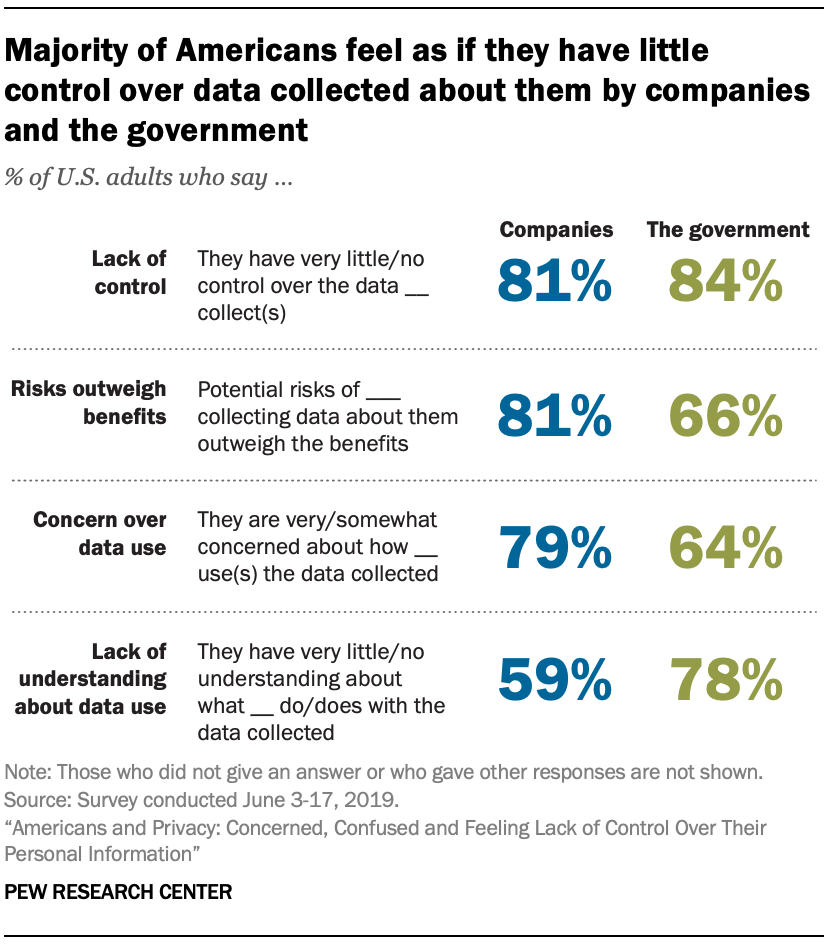
People also often have little meaningful say over what happens to their data. A nationally representative Pew survey found broad concern about the data practices of companies and government, with many Americans saying they have little control over how their information is collected and used. Research on cookie banners and tracking methods that followed the decline of third-party cookies suggests that consent can exist on paper without giving people a clear, practical choice. 2
Data breaches add to the sense that losses of privacy can be hard to undo. Industry reporting documents continuing theft and exposure of credentials, personal information and other sensitive data through ransomware, software flaws and other attacks. Once personal records have been copied or sold, an individual may be unable to take them back or fully replace them. But breaches do not by themselves prove that privacy has disappeared everywhere. 3
The case against
The strongest objection is straightforward: privacy protections still work, even if unevenly. Reviews of research on the EU’s General Data Protection Regulation, or GDPR, find that it has changed how organisations handle data and reduced some forms of data use. Those reviews also identify enforcement and compliance gaps, but their overall finding is not that regulation has failed completely. That makes the literal claim that privacy is dead too strong. 4
Privacy can also be built into technology. Techniques such as differential privacy, federated learning, secure multiparty computation and homomorphic encryption can allow useful analysis while limiting the exposure of personal information. The OECD has identified these approaches as tools for reducing risks, while the US National Institute of Standards and Technology provides ways to assess whether differential-privacy systems are delivering the protections they promise. These tools are not universal, and their effectiveness depends on how they are deployed and governed. Still, they show that privacy remains technically possible and can be checked, rather than being obsolete. 5
Nor does widespread sharing mean people have stopped caring about privacy. Research on the so-called “privacy paradox” finds that people may disclose information because of convenience, financial incentives or limited choices while still wanting stronger protections. Surveys likewise show continuing public concern about how personal data is used. 6
The bottom line
The evidence strongly favours a qualified rejection of the claim. Privacy as a default condition—where people can assume anonymity, limited sharing and real control—has substantially weakened, especially online. The evidence for that decline is strong.
But the evidence is also strong that privacy is not effectively dead. Regulation has produced measurable effects, technical protections can limit exposure, and privacy remains a social and legal goal. The reality is better described as privacy becoming a contested, uneven outcome that requires active protection, not something that has vanished altogether.
There is no single measure that can say exactly how much privacy remains across tracking, breaches, law, technology and public attitudes. Even so, the evidence is clearer on the central point: digital life has badly damaged traditional privacy defaults, but it has not eliminated the possibility of protected communications, lawful limits on data use or privacy in particular contexts.
Figures & data
All contributions are reviewed for clarity, balance, and evidence. The strongest insights are elevated into the argument graph — with credit to you.
Help improve this analysis →