Mail-in voting increases the risk of voter fraud
Bottom line (updated 2026-08-27): Mail voting does have weak spots, but that alone does not prove more fraud. The best proof shows that mail voting does not raise fraud overall, so the claim lacks strong support.
What's this about?
People disagree about whether mail-in voting makes voter fraud more likely.
The key question asks if mail voting causes more real fraud than voting at poll sites.
What supporters say
- Mail ballots pass through more steps, which gives bad actors more chances to steal or change them.
- People cast mail ballots away from poll workers, so others may pressure them or help them in secret.
What critics say
- Checks, ballot rules, and audits work together to find and stop many errors or fraud.
- Records show that proven fraud stays rare, and more mail voting does not bring more fraud reports.
How to read this
The number of points on each side does not show who is right; strong proof matters more than a long list.
The bottom line
Mail voting does have weak spots, but that alone does not prove more fraud.
The best proof shows that mail voting does not raise fraud overall, so the claim lacks strong support.
The claim that mail-in voting increases voter fraud rests on a real concern: ballots handled outside polling places may face different risks. But the available evidence does not show that those risks have produced more fraud overall than in-person voting.
The case for
Mail ballots are completed and returned outside the closely supervised setting of a polling place. That can make some protections harder to enforce, including secrecy, observation and protection from pressure or improper assistance. It may also create opportunities for ballot interception, coercion or third-party influence. 1
Mail voting also involves more stages than voting in person. Ballots must be issued, completed, collected, transported, returned and verified. Each stage can create an opportunity for mishandling, interception or organized manipulation. Security experts therefore identify additional attack surfaces in mail voting compared with ballots cast at supervised polling stations. 2 (see Figure 2)
But this argument shows only that mail voting has possible vulnerabilities. It does not show that those vulnerabilities lead to more fraudulent votes in practice. A pathway through which fraud could occur is not the same as evidence that fraud is occurring more often.
The case against
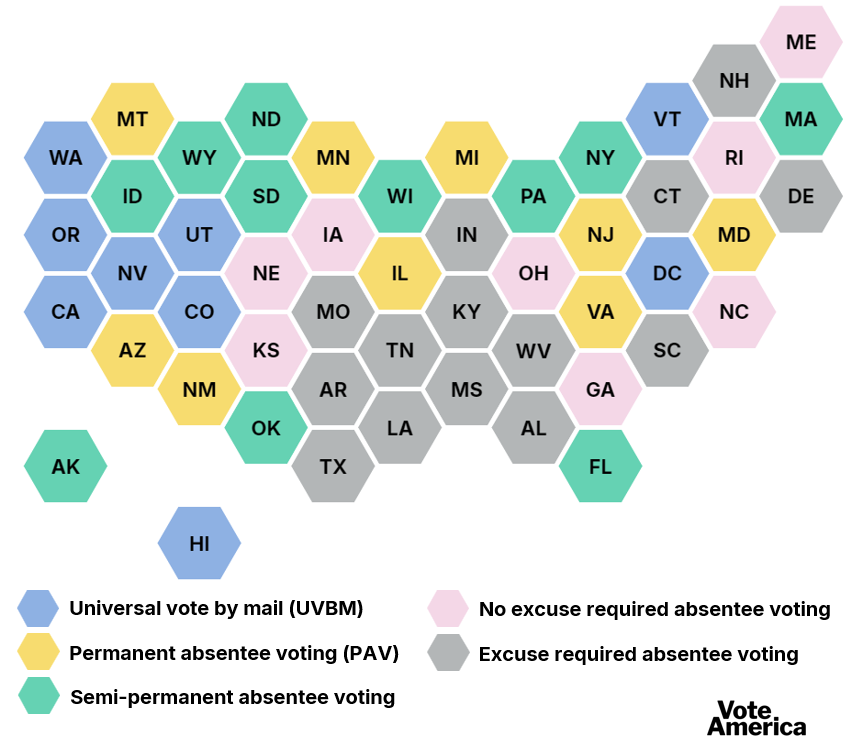
The strongest evidence against the claim is comparative. One study found no evidence that expanding mail voting increased reported voter-fraud allegations overall. That directly addresses whether broader use of mail ballots is linked to more fraud, rather than simply listing ways a ballot might be compromised. 3 (see Figure 1)
The finding has limits. Reported allegations are not a perfect measure of actual fraud because changes in detection, reporting, investigation or enforcement could affect the numbers. Even so, reviews of administrative and criminal records describe proven mail-ballot fraud as rare compared with the number of ballots cast. They also distinguish between allegations, administrative mistakes and crimes established by evidence.
Mail voting is not unprotected. Election officials use signature checks, ballot tracking, chain-of-custody rules, bipartisan handling, ballot curing and post-election audits. These controls do not eliminate every risk, but they create several layers of protection. 4 (see Figure 3)
Some documented problems involve signature verification, including subjective decisions, inconsistent standards, false rejections and procedural mistakes affecting legitimate voters. Those findings raise concerns about accuracy and access, but they are not evidence of voter fraud. Results also may differ by state because election rules, ballot collection, enforcement and reporting systems vary.
The evidence has another qualification: some administrative summaries come from organizations with policy preferences. Their conclusions should therefore be considered alongside peer-reviewed research and government records, rather than treated as conclusive on their own.
A major unanswered question is how much rare or concealed fraud goes undetected, and whether safeguards work equally well under every state’s rules and election conditions. The main comparative study measures reported allegations, while other research largely describes vulnerabilities, safeguards or administrative outcomes. None directly measures the full rate of fraudulent votes across different mail-voting systems.
The bottom line
The evidence does not establish that mail-in voting causes more voter fraud than voting in person. The case for the claim credibly identifies additional exposure points, but that mechanistic evidence is weaker than the comparative evidence showing no observed overall increase in fraud.
The balance of evidence therefore favors the case against a general increase, with moderate confidence. Mail systems may expose voters and ballots to particular risks, and those risks deserve continued auditing and local evaluation. But the current record does not support the broader conclusion that mail voting inherently produces more fraud.
Figures & data

All contributions are reviewed for clarity, balance, and evidence. The strongest insights are elevated into the argument graph — with credit to you.
Help improve this analysis →