Large-scale U.S. military interventions raise long-term Treasury yields by increasing expected federal deficits
Leaning yes
PRO 57%CON 43%
Pro 38% · Con 28% — Nuanced 34% — evidence mixed
What the evidence says Evidence quality: Pending
Graded from the quality of the cited sources · Evidence Protocol
Analysis in progress.
Figures & data
The evidence base behind this claim: 16 distinct cited sources
Every source cited on this claim, counted once at its highest evidence strength and grouped by the side it supports. Generated from this page's own evidence rows — the same records the verdict is computed from — so the chart and the score cannot disagree. Strength labels follow the scoring methodology.
View figure at source: Costs of Major U.S. Wars
CBO chart comparing the federal costs of major U.S. wars, including wartime spending, debt-financing costs, and related veterans' obligations across conflicts
Provides the clearest visual foundation for the claim by showing how large-scale military interventions generate substantial federal expenditures and debt-related costs, while also making clear that fiscal costs do not by themselves establish a Treasury-yield effect
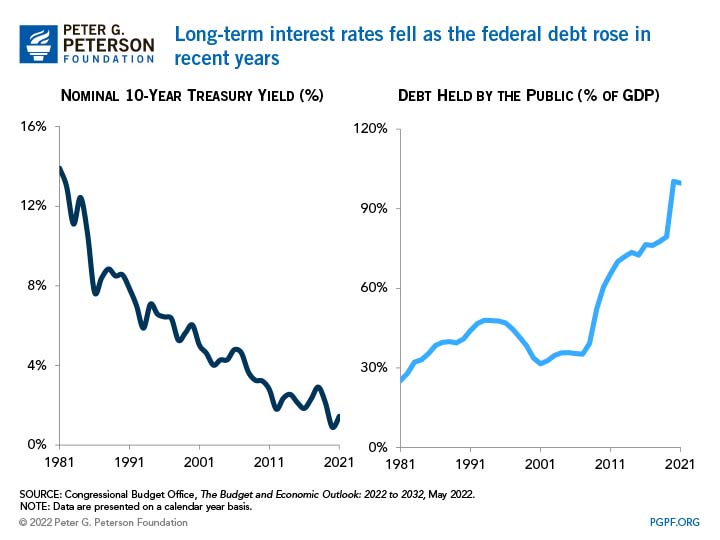
View cited figure at source: The Effects of U.S. Government Debt on Interest Rates
CBO chart showing the estimated relationship between federal debt held by the public and long-term interest rates, with historical data and projected or estimated interest-rate effects
This is the most direct visual for the proposed deficit-to-yield mechanism: higher debt is generally associated with upward pressure on interest rates, but the CBO presentation emphasizes uncertainty and conditionality rather than a mechanically fixed effect
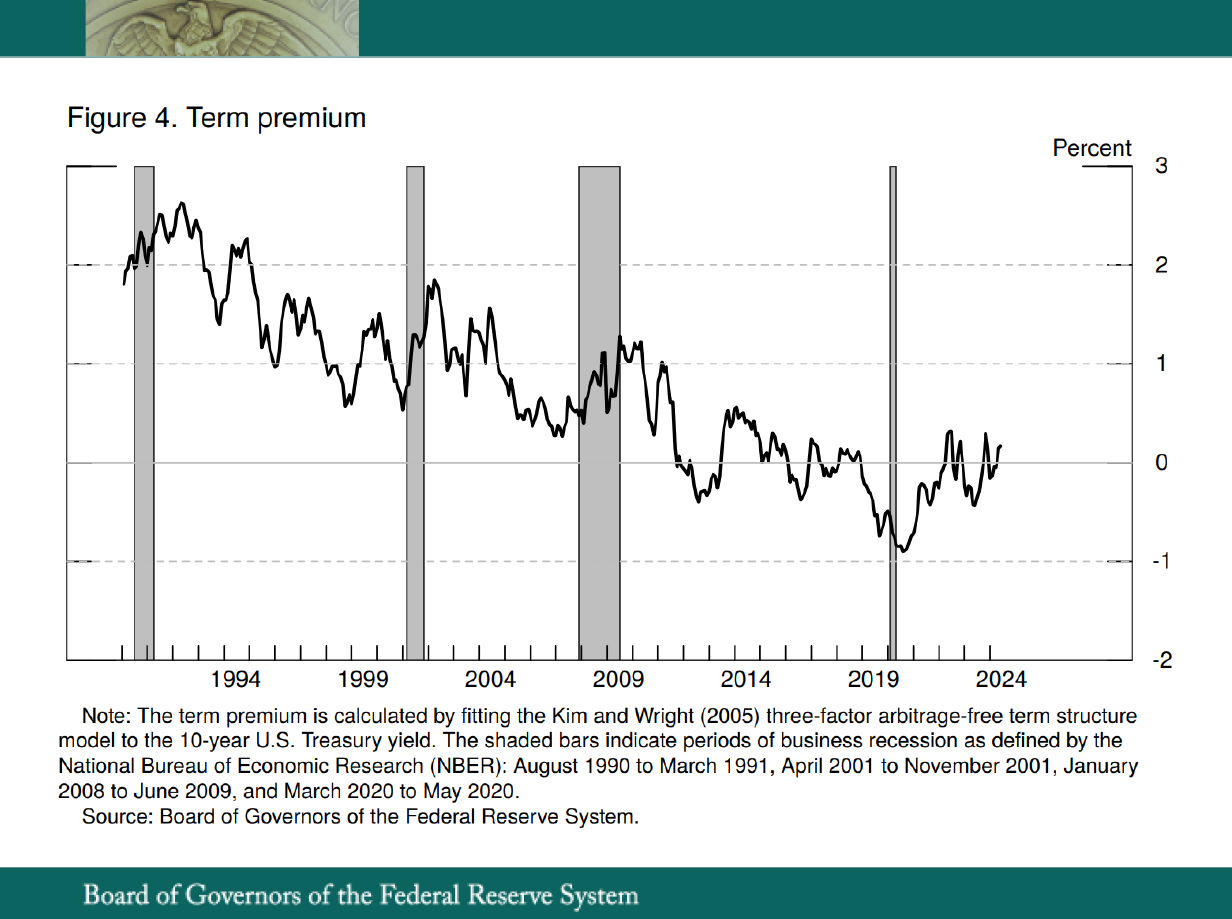
Source: federalreserve.gov · Cited in: The Decline in the U.S. Treasury Term Premium
Federal Reserve chart tracking the U.S. Treasury term premium and its decline over time, alongside factors such as global savings, lower inflation uncertainty, and demand for safe assets
Essential counterevidence to a one-directional war-borrowing story: long-term Treasury yields and term premia can fall or rise because of global demand for safe assets, inflation uncertainty, and financial conditions even when federal debt is increasing
All contributions are reviewed for clarity, balance, and evidence. The strongest insights are elevated into the argument graph — with credit to you.
Help improve this analysis →