Internal EU divisions reduce its effectiveness in responding to geopolitical conflicts
Bottom line (updated 2026-10-11): The claim is partly true: EU splits often slow action and make plans less united. Still, the EU usually can take major shared steps, so division does not always stop it.
What's this about?
People disagree about whether fights among EU countries make it less able to deal with wars and other world crises.
What supporters say
- EU rules let one country delay or weaken a shared plan on foreign affairs.
- During the Syria war, EU countries fought over borders, asylum, and who should help, hurting their shared response.
- After Russia attacked Ukraine, ties to Russian fuel made strong action harder and raised fears about high costs.
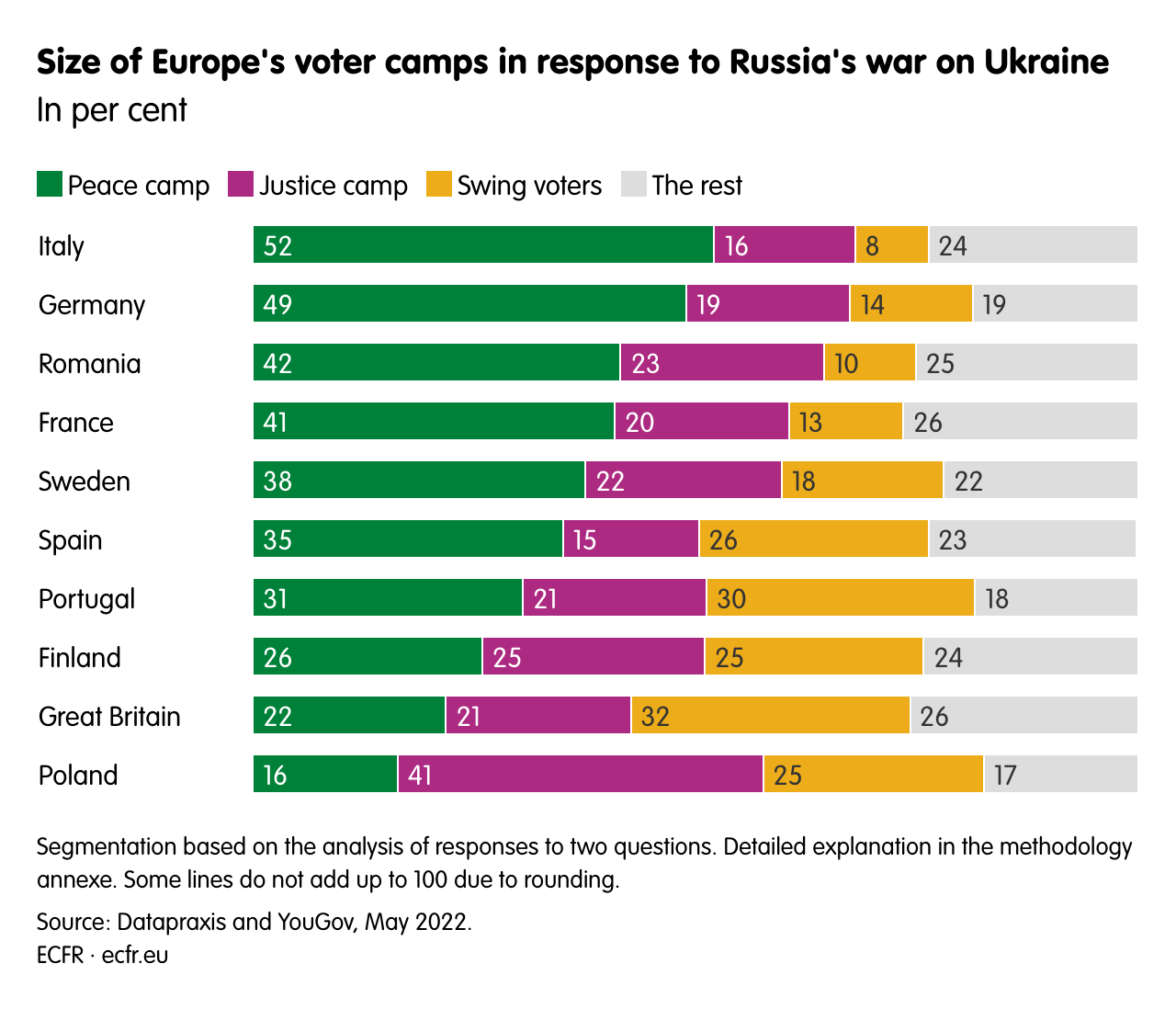
- Countries also shared the work unevenly, while people disagreed about choosing peace or justice.
What critics say
- EU groups and rules can still help countries deal with problems that cross their borders.
- EU countries took major shared steps against Russia, including trade limits and aid for Ukraine.
How to read this
The number of points on each side does not show who is right; the strength of the proof matters more.
The bottom line
The claim is partly true: EU splits often slow action and make plans less united.
Still, the EU usually can take major shared steps, so division does not always stop it.
The claim is partly supported: disagreements inside the European Union clearly make it harder to act quickly and consistently in geopolitical crises. But the evidence does not show that division usually prevents the EU from taking significant collective action.
The case for
The EU’s decision-making system gives national governments important opportunities to slow down or soften common foreign-policy measures. On issues linked to sovereignty, constitutional identity and national strategy, agreement among member states is often required. Different priorities can therefore delay decisions, reduce their ambition or make it harder for the EU to present a united geopolitical position. 1
The migration crisis linked to the war in Syria offers some of the clearest evidence. Member states disagreed over solidarity, responsibility-sharing, asylum rules and border controls. Those disputes made it difficult to carry out common policies and produced uneven responses to a crisis whose effects crossed national borders. The case suggests that internal division can weaken not only foreign-policy statements but also the management of spillovers from conflicts elsewhere. 2
Energy dependence created a similar problem after Russia’s invasion of Ukraine. EU countries did agree to impose major restrictions, but their different exposure to Russian energy and their concern about domestic economic costs narrowed the range and speed of possible measures. The bloc’s response included meaningful limits on Russia’s energy sector, yet national differences also shaped military, financial and humanitarian support. (see Figure 1) 3
These problems matter most when disagreement affects implementation and the sharing of burdens. A common decision may exist on paper while national governments apply it differently or contribute unequally. Public opinion has also differed across Europe over whether the response to the war should emphasize peace or justice, adding domestic pressure to an already difficult effort to maintain a common position. (see Figure 2)
The case against
Internal disagreement has not stopped the EU from taking consequential action. In response to Russia’s invasion of Ukraine, the bloc adopted sanctions that affected Russian financial markets, imposed substantial energy restrictions and coordinated policies aimed at energy security and diversification. These measures show that divisions do not automatically prevent a common response to a major geopolitical crisis. 4
The EU’s shared institutions can also limit the effects of cross-border crises. Common arrangements have helped preserve stability in the internal market, while the temporary-protection system gave people fleeing the war in Ukraine a shared legal framework across the Union. The system did not produce identical national practices, but it allowed the EU to respond rapidly and reduce some of the pressure created by the conflict. 5
The Ukraine experience therefore points to a more complicated conclusion. Common institutions can produce meaningful action even when member states face different political and economic pressures. At the same time, those institutions may not guarantee equal implementation or an even distribution of costs.
The bottom line
The evidence favours a qualified version of the claim, with high overall confidence. Internal EU divisions clearly constrain the speed, coherence, consistency and burden-sharing of responses. The evidence for these effects is stronger than the evidence that divisions prevent the EU from taking consequential collective measures.
What remains uncertain is how much those disagreements change the final outcomes of conflicts. Existing legal analyses and case studies show the mechanisms through which division can cause delay, dilution or uneven implementation, but they provide limited systematic evidence that internal disagreement itself produces worse geopolitical results or substantially larger spillovers. Other factors—including administrative capacity, outside pressure and institutional design—also shape EU performance.
The clearest overall finding is therefore not that division makes effective action impossible. Rather, the EU can act collectively, but its response is more likely to be slower, less uniform and less evenly shared when national interests pull in different directions.
Figures & data

All contributions are reviewed for clarity, balance, and evidence. The strongest insights are elevated into the argument graph — with credit to you.
Help improve this analysis →