Implementing price controls on prescription drugs will lower overall healthcare costs
Bottom line (updated 2026-08-29): The proof strongly shows that price limits can lower spending on covered drugs. We are not sure yet whether they will lower total health care costs.
What's this about?
People disagree about whether drug price limits will lower all health care costs.
The answer depends on whether savings on drugs also reduce costs for care.
What supporters say
- Price talks can lower spending on the drugs covered by the plan.
- Lower drug costs may help people take needed drugs and avoid some hospital stays.
What critics say
- Drugs make up only one part of all health care spending, so savings may stay small.
- Lower prices may give drug makers less reason to create new drugs.
- Some price limits may cause drug shortages or make some drugs harder to get.
How to read this
The number of points on each side does not show who is right; strong proof matters more.
The bottom line
The proof strongly shows that price limits can lower spending on covered drugs.
We are not sure yet whether they will lower total health care costs.
The claim that prescription-drug price controls will lower overall healthcare costs has a stronger case when measured by savings on the drugs covered. But whether those savings reduce spending across the entire healthcare system is less certain.
The case for
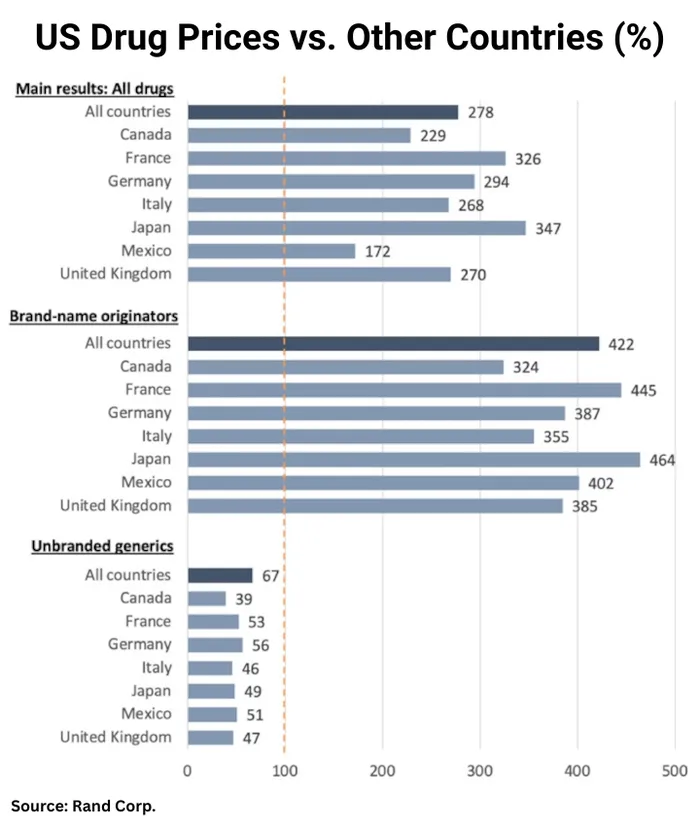
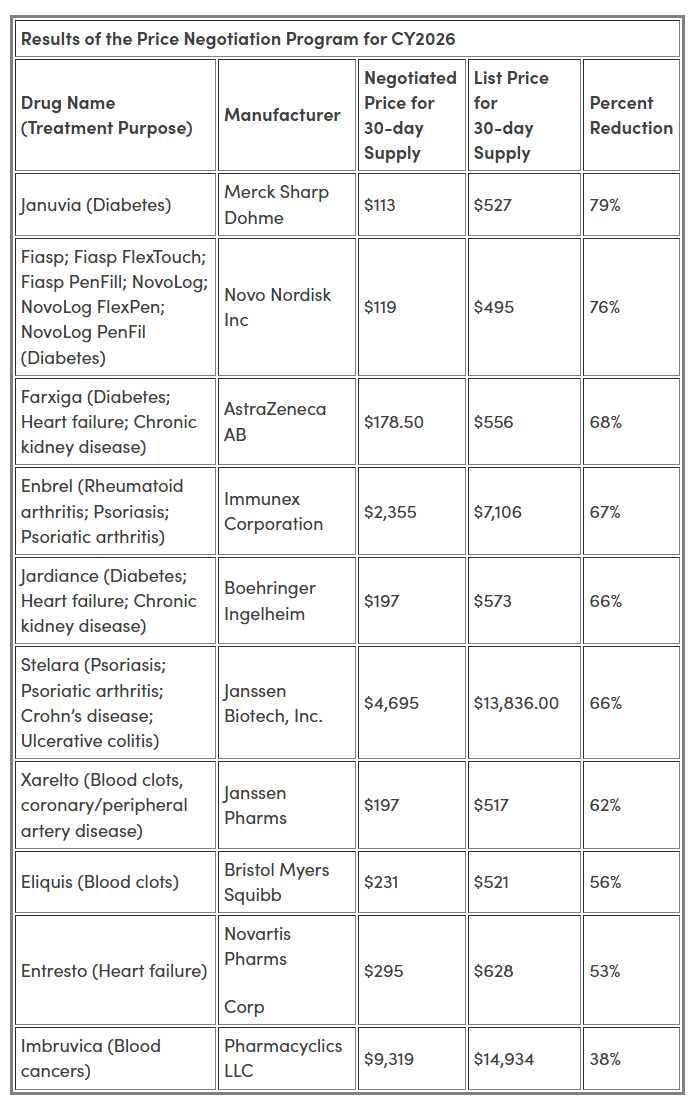
The clearest benefit is direct: negotiation and reference pricing reduce spending on the medicines they cover. CMS reports that prices negotiated for the first group of Medicare medicines were below earlier list or net-price benchmarks. A systematic review also found that reference-pricing systems generally cut spending on affected drugs. U.S. buyers pay substantially more for prescription medicines than people in comparable high-income countries, suggesting that purchasing controls could capture some of that gap. (see Figure 1) 1
Lower prices could also reduce other medical costs if patients can more easily afford and consistently take their medicines. An umbrella review found that reducing medication costs generally increases medication use and can change how people use other health services. For patients with chronic illnesses, better adherence may prevent some avoidable emergency visits or hospital stays. 2
These effects mean the policy could save money beyond the pharmacy counter. But the strongest evidence supports a narrower conclusion: price controls lower spending for the medicines and payers directly covered by the policy.
The case against
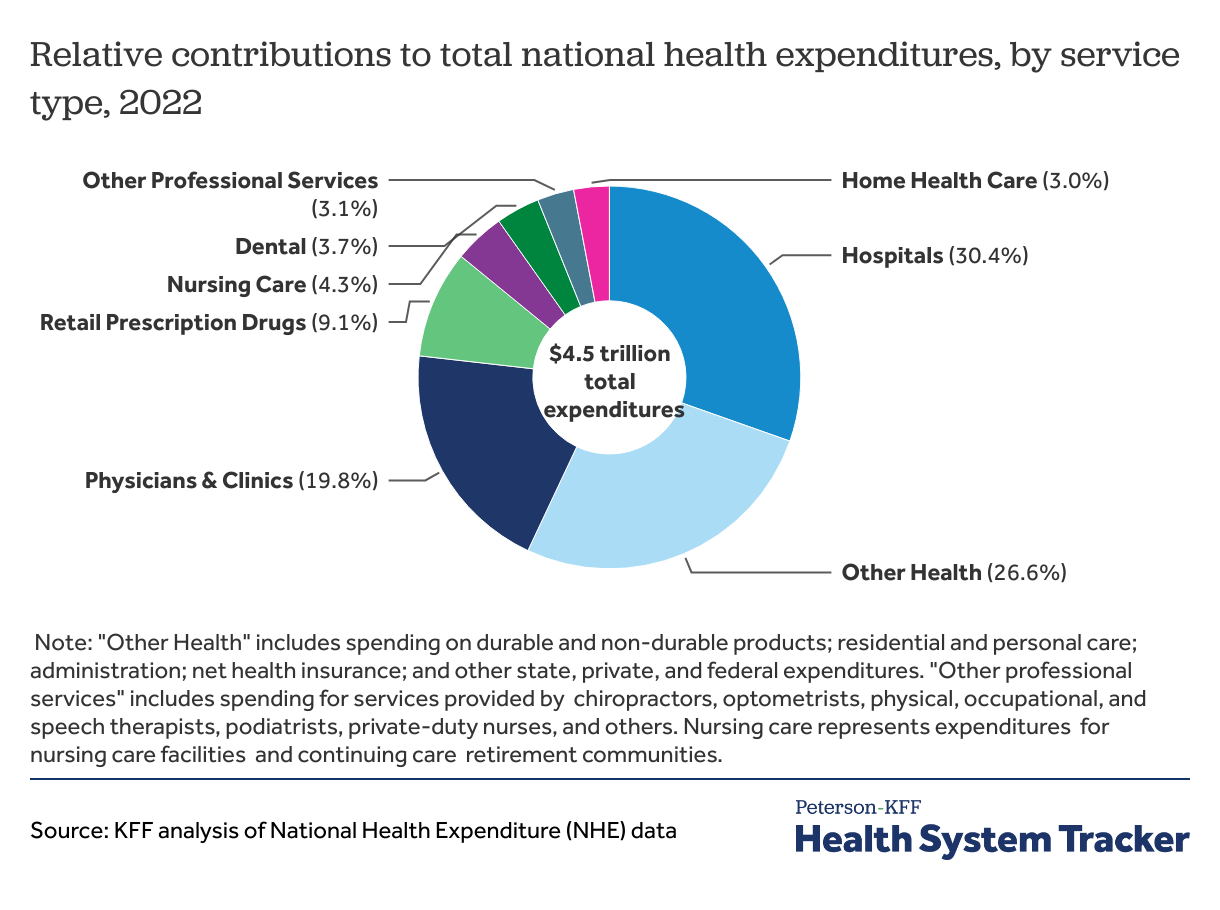
Prescription drugs make up a substantial but minority share of total healthcare spending. That limits the overall arithmetic effect of even a large price reduction unless it also changes hospital, physician and other costs. National health-spending data illustrate this constraint. (see Figure 3) The umbrella review found that the effects on total spending vary: lower patient costs can improve adherence, but greater use of medicines can also increase drug spending, while savings in other medical services do not appear consistently. 3
Price controls may also weaken incentives to develop new medicines. The Congressional Budget Office projects that Medicare negotiation would produce federal savings but also a small reduction in expected pharmaceutical innovation. Other studies examine whether lower prices affect companies’ research efforts, the timing of product launches or the number of new medicines introduced. The size of any long-term effect remains uncertain, but it could offset some immediate savings. 4
There are also possible risks to supply and access. Evidence on antimicrobial shortages suggests that weak financial incentives can contribute to fragile supply chains. Comparisons across countries find differences in medicine availability and launch timing, while analyses of proposed Medicare Part B changes point to possible tradeoffs involving providers’ incentives, treatment availability and administrative complexity. These risks depend heavily on how a policy is designed. 5
The available research does not combine all these effects into one reliable, system-wide estimate. It identifies several ways savings could be reduced or amplified, including patients’ adherence, substitution toward more expensive drugs, changes in medical-service use, product availability, launch timing and innovation. Some unresolved conflicts-of-interest classifications in the underlying evidence also make the independence of certain estimates uncertain.
The bottom line
The evidence favors a conditional claim, not a universal one. There is high confidence that well-designed price controls lower spending on the prescription medicines they cover. The evidence is much less decisive on whether they reduce total healthcare spending across all payers and patients.
The opposing case is not equally strong on every point: its best evidence shows why drug savings may not translate proportionally into system-wide savings, rather than proving that price controls increase overall costs. The key uncertainty is how patients, doctors, manufacturers and insurers respond over time—especially whether improved adherence lowers other medical costs, and whether reduced prices affect future innovation, access or supply.
Figures & data
All contributions are reviewed for clarity, balance, and evidence. The strongest insights are elevated into the argument graph — with credit to you.
Help improve this analysis →