Gemma-3-27B-IT fits DGX Spark and is lighter on bandwidth than dense 70B models
What's this about?
People disagree about whether Gemma-3-27B-IT runs well on a DGX Spark computer. They also ask if it needs less memory speed than a dense 70B model.
What supporters say
- DGX Spark has 128 GB of shared memory, which gives Gemma 3 lots of room.
- A 4-bit version of Gemma 3 may use only about 15 GB for its main model data.
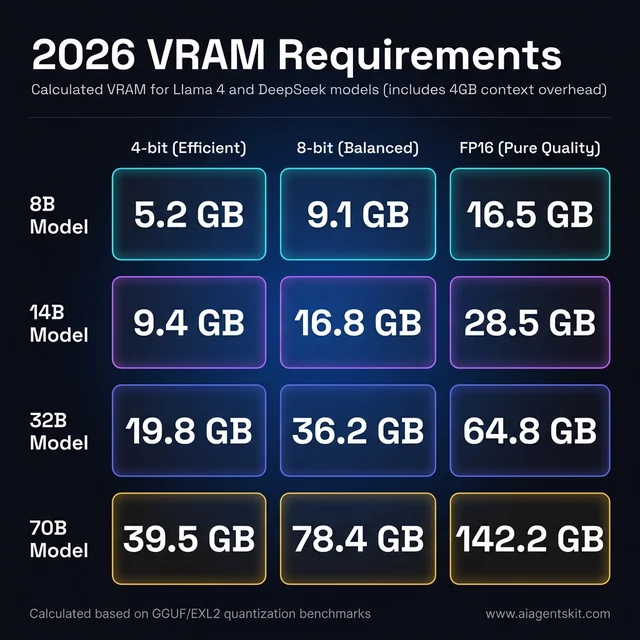
- A 70B model often needs about 35 to 45 GB, even before extra needs.
- Gemma 3 has fewer model parts than a dense 70B model, so it should move less data.
What critics say
- The model data does not make up all the memory a chat session needs.
- Long chats need more memory because the computer must keep more past text.
- Different apps and run tools can change memory use and speed.
- Less data moved does not promise a set speed gain in every task.
The bottom line
Gemma-3-27B-IT should fit well on DGX Spark when you use a low-bit version. For one person using it in a normal chat, it should need less memory speed than a dense 70B model.
Gemma-3-27B-IT is likely a practical model to run on Nvidia’s DGX Spark in its quantized forms, and it should generally put less pressure on memory bandwidth than a dense 70-billion-parameter model. But that conclusion is strongest for ordinary single-user use, not for every runtime, context length or workload.
The case for
The central advantage is simple: DGX Spark has 128 GB of shared CPU-GPU memory, while low-bit versions of Gemma-3-27B-IT need far less space for their model weights. Gemma 3’s 27B version is available in widely used local-inference formats with 4-bit to 8-bit quantization. A common 4-bit Q4_K_M version, for example, is reported to need only roughly the mid-teens of gigabytes for weights. That leaves substantial memory room on a 128 GB system for a typical inference session. 1
This does not mean the full model workload uses only that amount of memory. Still, for ordinary single-user inference, quantized weights appear to fit comfortably enough that the basic capacity case is strong. By comparison, practical guidance for dense 70B models puts common 4-bit storage and runtime memory needs at roughly 35 GB to 45 GB before accounting for context length and other overhead (see Figure 3). The 27B model therefore starts with a much smaller memory burden.
The bandwidth argument is also persuasive, though it is more limited. Generating text one token at a time often depends heavily on how quickly a system can move model weights through memory. A dense 27B model normally has fewer weights to read than a dense 70B model, assuming similar quantization and comparable software conditions. Fewer parameters generally mean fewer weight bytes moved per generated token, which points to lower memory-bandwidth demand (see Figure 1). 2
That is a useful engineering expectation, rather than a promise of a fixed speed advantage. It supports the view that Gemma-3-27B-IT should be easier on bandwidth than a comparable dense 70B model, particularly in the common low-bit setups aimed at local deployment.
The case against
The main caveat is that model-file size is not the same as total memory use during inference. Beyond the weights, a running system needs space for quantization data, temporary tensors, framework buffers, activations, allocator overhead and the KV cache, which stores information from the ongoing conversation. 4
Those extra demands can become significant with very long prompts, multimodal requests that include images, or several simultaneous users. Gemma 3 supports long contexts and multimodal work, so its real-world memory needs can rise well beyond the size of its quantized weight file. In those settings, the available headroom on DGX Spark may shrink quickly.
There is also a gap between a hardware bandwidth specification and the bandwidth applications actually sustain. DGX Spark’s advertised bandwidth is a peak figure, not a direct measurement of sustained performance for Gemma-3-27B-IT in a particular inference engine. Third-party reviews and developer discussions suggest measured DDR bandwidth can fall below that headline number, although they do not establish one universal result for all workloads (see Figure 2). 3
That matters because fast-looking hardware can still deliver disappointing latency or throughput if the selected backend handles unified memory poorly, spends heavily on dequantization, or adds substantial runtime overhead. Batch size, kernel quality, memory placement, synchronization and KV-cache traffic can all affect results. A smaller parameter count therefore does not guarantee a specific tokens-per-second lead over every 70B model.
Most importantly, there is no controlled benchmark comparing Gemma-3-27B-IT and dense 70B-class models on DGX Spark using the same software, quantization, context lengths and concurrency levels. Existing estimates are useful, but they come from a mix of vendors, repositories, compatibility guides, reviews and forums with differing assumptions.
The bottom line
The claim is broadly correct, with important limits. Quantized Gemma-3-27B-IT should generally fit within DGX Spark’s 128 GB unified memory for normal single-user inference, and its smaller dense parameter count should generally require less weight-bandwidth traffic than a dense 70B-class model. 1 2
Confidence is high in those directional conclusions. It is lower, however, for claims about a guaranteed comfort margin, sustained bandwidth, or a particular speed advantage. Long contexts, image inputs, large KV caches, concurrent users and runtime inefficiency can all narrow the practical gap.
Figures & data
All contributions are reviewed for clarity, balance, and evidence. The strongest insights are elevated into the argument graph — with credit to you.
Help improve this analysis →