Egg-based, strain-matched development is the primary reason flu-vaccine efficacy is difficult to improve
What's this about?
People disagree about whether growing flu vaccines in eggs causes most problems with better flu shots. Eggs can hurt some vaccines, but flu viruses also change fast.
What supporters say
- Egg growth can change the vaccine virus, so it may not match the flu virus people catch.
- This problem often affects H3N2, a flu type that has been hard to fight.
- Egg growth can change sugar coats on H3N2, which can confuse the body's defense proteins.
- Cell-grown and lab-made vaccines avoid egg growth and can work as well or sometimes better.
What critics say
- Flu viruses keep changing over time, even when makers do not use eggs.
- Vaccine makers must guess which flu types will spread many months before flu season.
- A good match can still give less help if the virus changes after makers choose it.
- Age, health, and past flu shots can also change how well a vaccine protects someone.
The bottom line
Egg growth can lower protection, most clearly in some H3N2 seasons. But it does not cause most problems with improving flu shots overall.
Egg-based, strain-matched flu vaccines can lose some of their punch during production, especially against H3N2 viruses. But the evidence says this is an important, fixable problem—not the main reason flu-vaccine effectiveness remains hard to improve overall.
The case for
Growing vaccine viruses in chicken eggs can cause the viruses to change in ways that matter for protection. This is particularly true for H3N2, a flu subtype that has often been difficult to target. The virus selected for a vaccine may not look quite the same by the time it has been grown in eggs, meaning antibodies triggered by the vaccine may recognize circulating viruses less well. 1
Researchers have identified a specific mechanism behind this problem. In contemporary H3N2 viruses, an egg-related change involving glycosylation—a sugar coating on the virus—has been linked to altered antibody recognition. Reviews and expert assessments conclude that these egg-adaptive changes can reduce vaccine effectiveness, with the clearest effects appearing in some H3N2 seasons. The poor H3N2 protection seen in the 2017–18 flu season is consistent with that explanation, though it was not the only factor at work.
Alternatives to egg-based production offer a practical way around at least some of these changes. Cell-based and recombinant vaccines do not require the same egg-growing process and can therefore avoid relevant egg adaptations. A systematic review and meta-analysis found that cell-based vaccines performed about as well as, and sometimes better than, egg-based products. 2
That makes manufacturing platform a real part of the problem—and one that vaccine makers can address. In seasons when egg adaptation makes the vaccine virus less similar to the virus people encounter, non-egg vaccines may offer particular value.
The case against
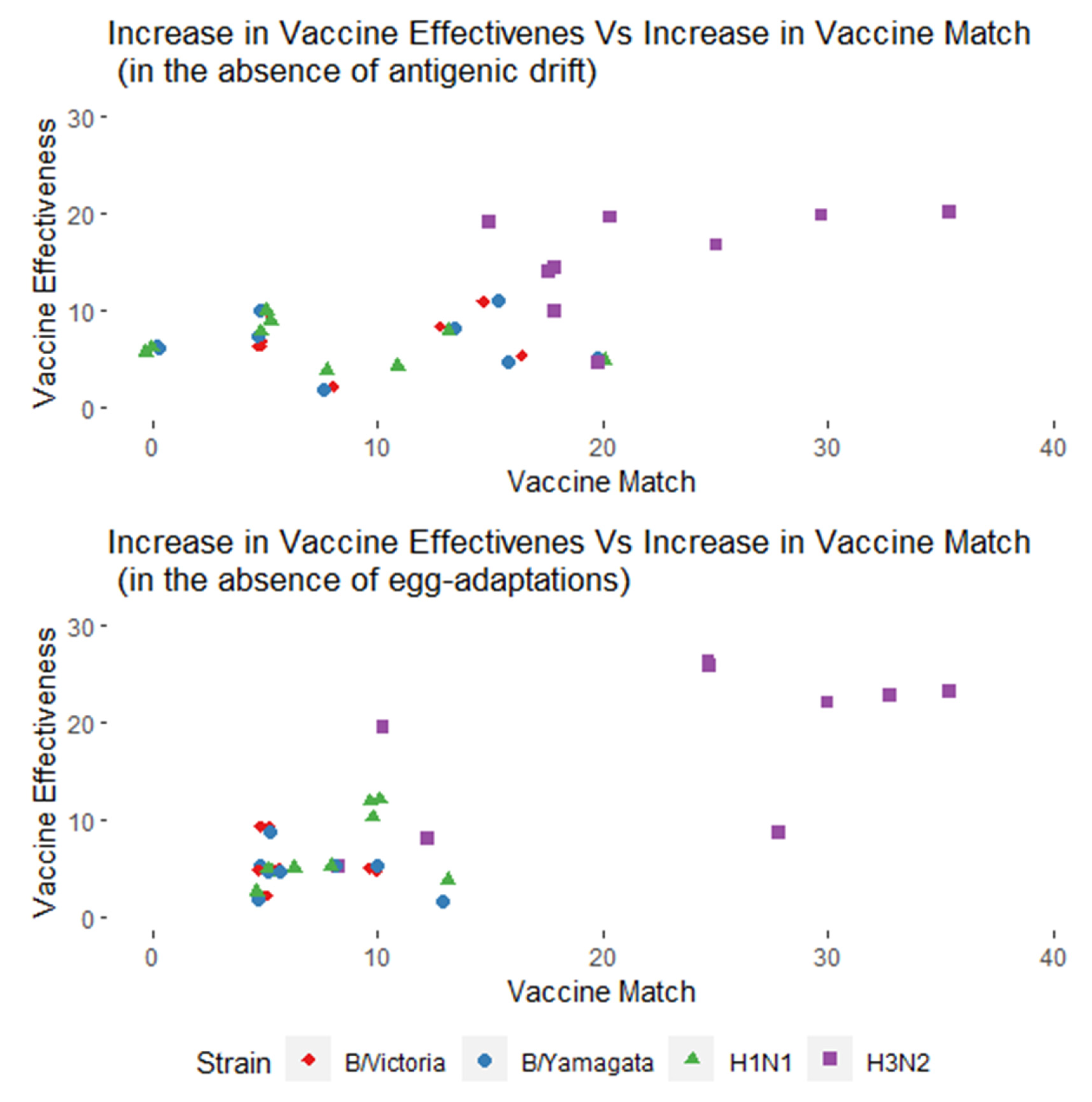
The central weakness in the claim is that flu viruses can evade vaccines even when eggs are not involved. Antigenic drift—the virus’s continuing evolution—can move circulating strains away from the strain chosen for the vaccine after that choice has been made. A multi-season US study tied lower vaccine effectiveness to the antigenic distance between vaccine and circulating viruses, showing that this kind of mismatch is independent of production method (see Figure 2). 3
The H3N2 challenge is therefore broader than egg adaptation. Reviews describe it as the result of rapid viral evolution, manufacturing-related changes, people’s complex immune histories and the difficulty of measuring what counts as reliable protection. Replacing eggs alone cannot solve all of those problems.
People’s immune systems also set limits on vaccine performance. Older adults may produce weaker or more variable immune responses because of immunosenescence, the gradual aging of the immune system. A review of randomized trials found this to be an important constraint independent of how a vaccine is made. Protection can also fade over the course of a season, even when the vaccine and circulating viruses are reasonably well matched. 4
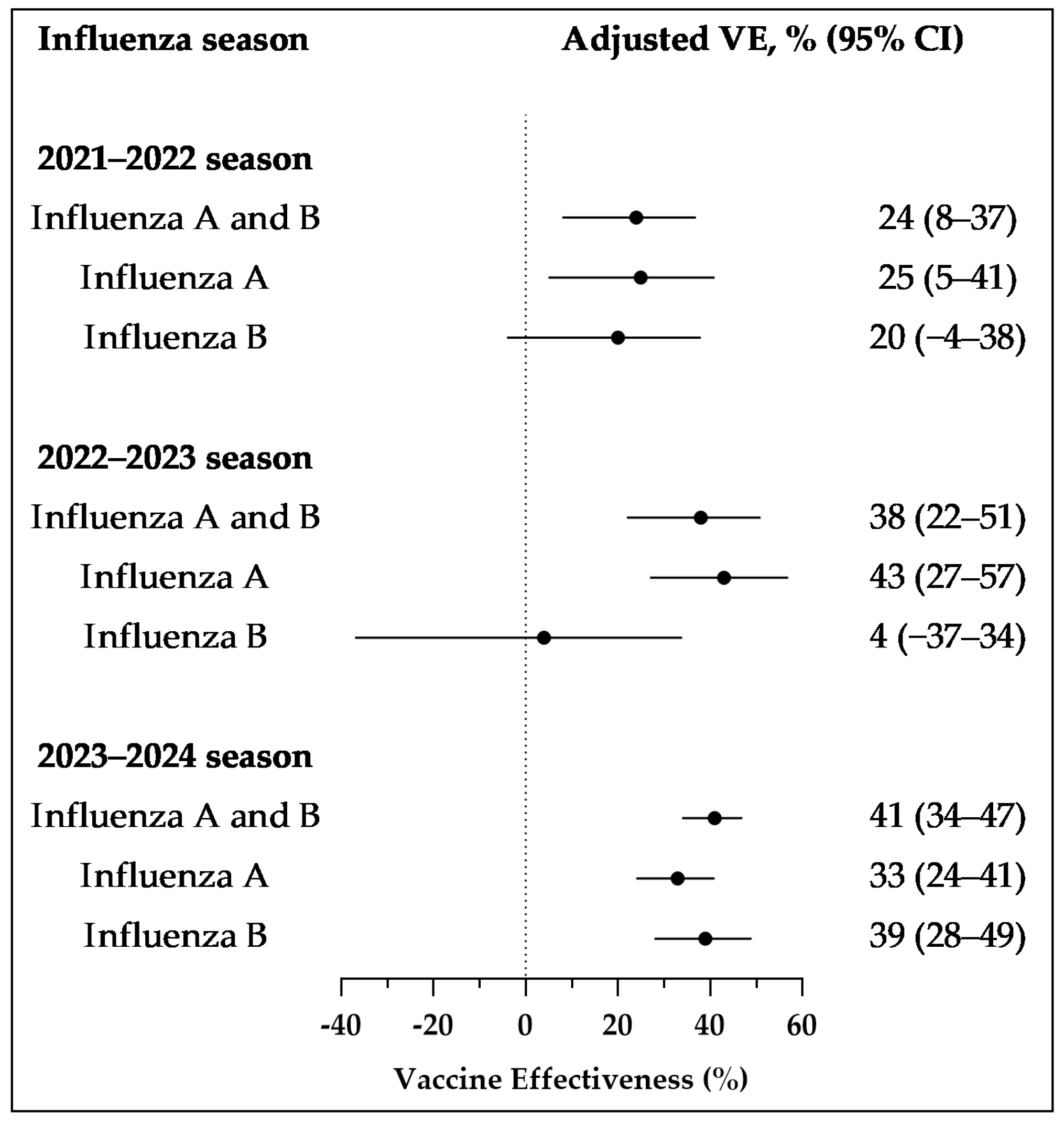
Recent CDC estimates similarly show that effectiveness varies by age, care setting, and virus type or subtype, including in an era with improved strain selection and non-egg products available. These differences underline that a vaccine’s real-world performance depends on more than its manufacturing platform.
Nor do direct comparisons show that alternatives deliver a consistently large advantage. A randomized comparison of cell-based and egg-based vaccines found limited differences in antibody responses, and stronger antibody responses would not automatically prove better clinical protection. Studies of real-world effectiveness have sometimes found benefits for non-egg vaccines, but those benefits vary by season, strain, product and population. 5
Many of those comparisons are observational, meaning they can be affected by differences among recipients—for example, their age, health or tendency to seek medical care. That makes it difficult to isolate the effect of the production platform itself.
The bottom line
Egg adaptation is real, clinically important in some circumstances, and especially relevant to certain H3N2 seasons. It is also a problem that can partly be reduced through cell-based or recombinant vaccine production.
But the evidence does not support calling egg-based, strain-matched development the primary reason flu-vaccine effectiveness has been so difficult to improve. Viral evolution, aging and prior immunity, waning protection, and variation among strains and seasons are independent forces that can equal or outweigh egg-related mismatch.
The conclusion carries high confidence: egg-based production is a substantial, context-dependent obstacle, not the single dominant cause. What remains missing is a definitive cross-season analysis that can reliably rank its effect against all the other reasons flu vaccines fall short.
Figures & data
All contributions are reviewed for clarity, balance, and evidence. The strongest insights are elevated into the argument graph — with credit to you.
Help improve this analysis →