Cloud-provider concentration creates systemic outage vulnerabilities
Bottom line (updated 2026-11-13): Too much cloud use can create a wide outage risk, but that danger does not always happen. Backups, moveable apps, and more than one cloud firm can limit the harm. The supporters have the stronger case, but proof about outages spreading across many services remains limited.
What's this about?
People disagree about whether too much use of a few cloud firms can cause wide harm. A cloud firm stores data and runs apps for many customers.
What supporters say
- One cloud firm may become a shared weak spot for many firms, schools, and public groups.
- A small cloud market can make quick change hard, since moving data may cost money and take time.
- Key services, such as power, banks, and health care, may rely on the same cloud firms.
- Past cloud failures have stopped many apps and online services at the same time.
What critics say
- Using more than one cloud firm can add hard work, errors, and new ways to fail.
- Cloud design can keep many failures small, so one bad part may not harm every customer.
- Big cloud firms can spend more on safety, backup tools, and strong systems than small firms can.
How to read this
The number of points on each side does not show who is right; check how strong the proof is behind each point.
The bottom line
Too much cloud use can create a wide outage risk, but that danger does not always happen. Backups, moveable apps, and more than one cloud firm can limit the harm. The supporters have the stronger case, but proof about outages spreading across many services remains limited.
Cloud-provider concentration can create a systemic outage risk, but the danger is conditional rather than inevitable. Shared dependence may spread a provider’s failure across many organizations, while backup systems, portable workloads and multiple providers can limit the damage.
The case for
The strongest argument is that major cloud providers can become common points of failure. When many companies and public institutions rely on the same provider, an operational problem can affect customers that would otherwise appear unrelated. UK financial regulators have specifically warned about systemic concentration when one or a few difficult-to-replace technology providers serve many regulated firms. The Bank of England has also argued that controls at individual companies may not reveal weaknesses created by dependencies shared across the financial system. 1
There is evidence that outages can spread through downstream services, although it is not comprehensive. An AWS outage in the US-East-1 region in December 2021 disrupted numerous retail, consumer and business applications. A Google Cloud incident in June 2025 also affected multiple internet services, while the other two major providers were not reported to be suffering simultaneous outages in the cited account (see Figure 3). These incidents show that a provider failure can have consequences well beyond the provider itself. 2
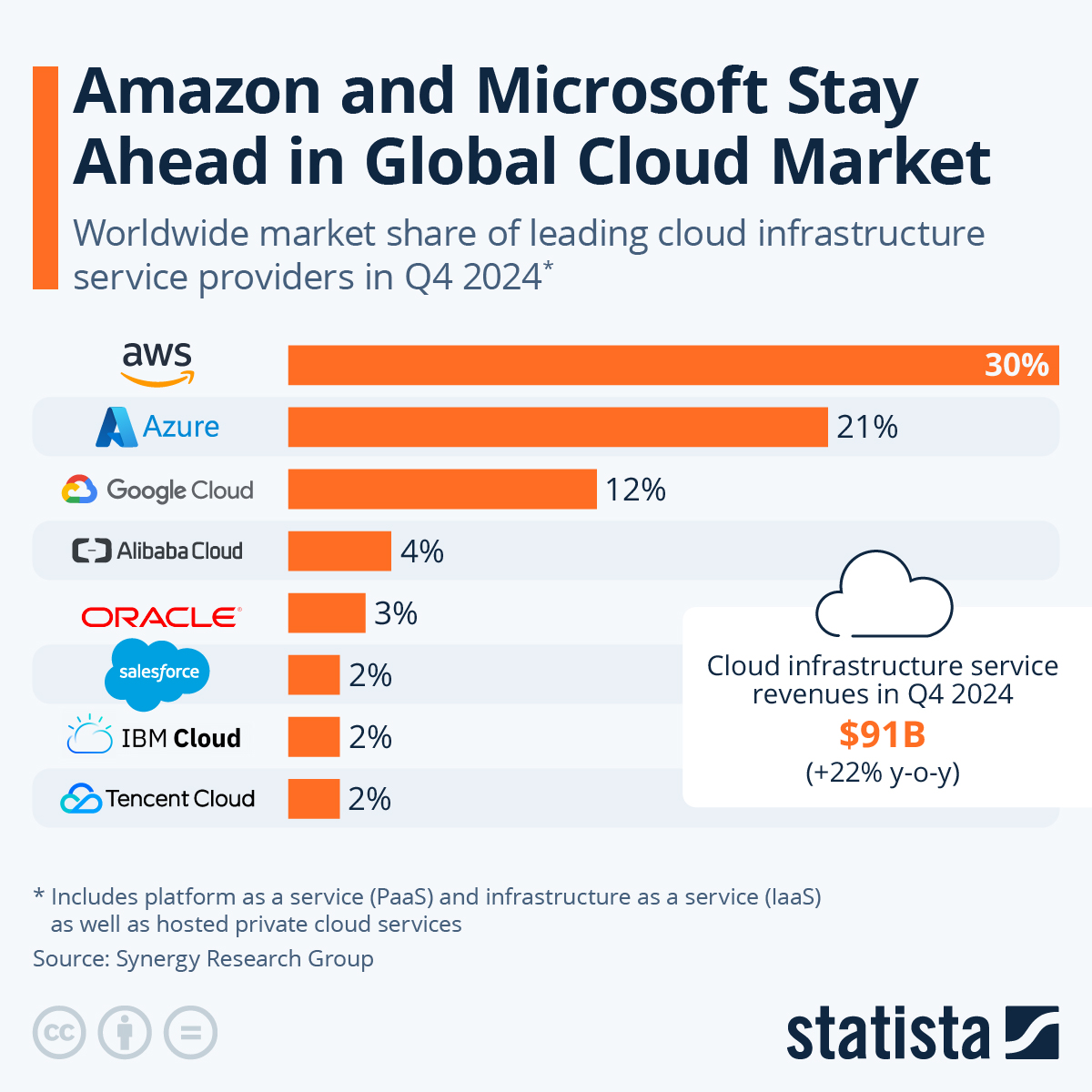
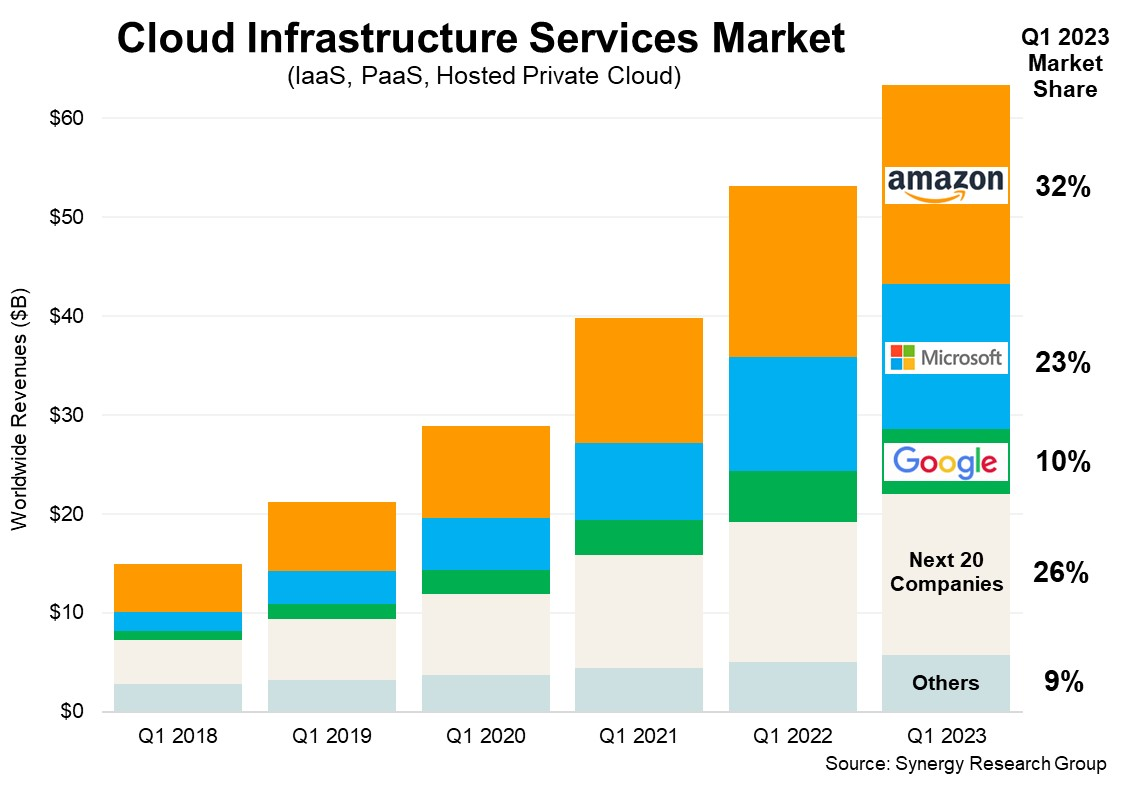
Concentration also makes recovery harder if customers cannot switch quickly. Ofcom has pointed to supplier concentration, barriers to switching and fees for moving data out of a provider. The Competition and Markets Authority opened a market investigation amid concerns about competition, switching and the structure of public-cloud infrastructure services. If a provider is difficult to replace, customers may remain exposed during an outage rather than shifting workloads elsewhere. 3
The risk is particularly important for essential services. ENISA recommends mapping cloud dependencies in critical infrastructure and including major cloud services in risk assessments. The Bank of England treats common third-party providers as a system-wide resilience issue in finance. Schools and government services may also depend on cloud infrastructure, but the available evidence is less precise about how often failures affect them at the same time. 4
The case against
Cloud concentration does not automatically determine how widely an outage will spread. Modern cloud systems can isolate failures by region, service or customer, and organizations can build hybrid or multi-cloud arrangements that allow applications to move between providers. The AWS evidence, for example, concerns a heavily used region, not the simultaneous failure of every provider or cloud region. 5
Large providers may also bring resilience benefits. ENISA describes cloud computing as offering potential improvements in security and reliability, while Government Accountability Office evidence records both those possible benefits and significant concerns about cloud-related information security. Scale can therefore make some services more robust even as it creates shared dependence. 6
Using several providers is not a guaranteed solution. It can require costly technical changes, new skills and complex operations. Research on serverless computing identifies vendor lock-in and examines multi-cloud strategies designed to reduce dependence, but also highlights the difficulty of moving workloads between providers. NIST presents portability and “cloud bursting” as possible design choices, not automatic protections. 7
The bottom line
The evidence favours the claim, but only conditionally and with low confidence. It strongly supports the basic mechanism: shared reliance on difficult-to-replace cloud providers can amplify a local failure into disruption affecting many customers. Documented incidents and regulatory warnings make that exposure credible.
The evidence is much weaker on how often this becomes material, cross-sector systemic harm. It does not show that all customers, or businesses, schools and governments together, routinely suffer serious disruption from the same event. The risk is better established for critical shared services—especially financial-sector dependencies—than for the wider economy.
The final impact depends on the provider region and service involved, the importance of the affected workload, and the customer’s isolation, failover and switching arrangements. Market concentration establishes the potential for harm, and outage reports show that disruption can spread. But there is not yet a reliable measure of how frequently safeguards prevent that spread, how many customers are affected when they do not, or whether hyperscale providers’ resilience benefits outweigh the risks of common dependence.
Figures & data
All contributions are reviewed for clarity, balance, and evidence. The strongest insights are elevated into the argument graph — with credit to you.
Help improve this analysis →