Attitudes toward immigration significantly influence voting behavior in Canada
Bottom line (updated 2026-10-21): The evidence shows that immigration attitudes can affect voting in Canada, especially when parties make the issue important. However, immigration is only one part of voting, and the proof that changing views shift whole voter groups remains unclear.
What's this about?
People disagree about whether views on immigration (people moving to Canada) strongly affect how Canadians vote. The evidence says they can matter, but other issues matter too.
What supporters say
- Surveys show a clear link between views on immigration and the party people choose.
- Immigration matters more when parties take very different views or talk about it often.
- If views on immigration change, some voter groups may switch to other parties.
What critics say
- Immigration is only one issue among many, such as money worries, jobs, health care, and other social views.
- Most Canadians do not hold fully anti-immigration views, so immigration may not guide every vote.
How to read this
The number of points on each side does not show who is right; strong proof matters more than a long list.
The bottom line
The evidence shows that immigration attitudes can affect voting in Canada, especially when parties make the issue important. However, immigration is only one part of voting, and the proof that changing views shift whole voter groups remains unclear.
The claim that immigration attitudes significantly influence voting in Canada is broadly supported—but with important limits. The evidence shows that immigration can shape party choice, especially when the issue is politically prominent, while also warning that it is only one part of a larger set of influences.
The case for
Canadian survey research finds a clear link between views on immigration and party choice, particularly among right-leaning voters. Studies based on the Canadian Election Study examine immigration attitudes alongside economic insecurity and other social views, making the relationship more meaningful than a simple comparison of opinions and votes. These findings suggest that immigration attitudes are part of the way Canadians make electoral decisions, even though the research mainly shows association rather than proving direct causation. 1
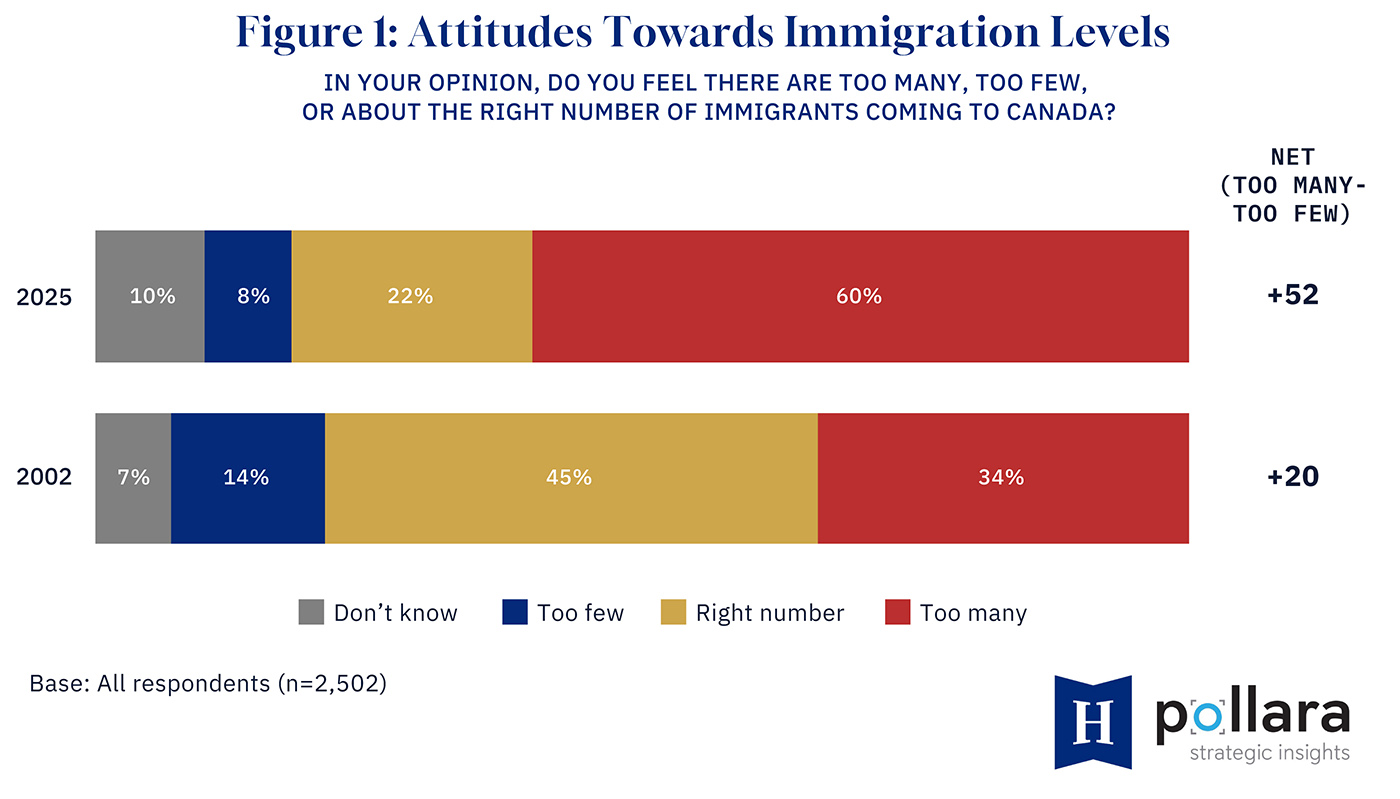
Immigration can also become more important when parties take sharply different positions or campaign heavily on the issue. Canadian Election Study-based analyses document changes in public attitudes and argue that those shifts can have political consequences when immigration receives sustained attention (see Figure 2). Comparative research likewise finds that voters are more likely to align their preferences with party positions when immigration is made especially prominent.
Canadian election data and analysis of social-media discussion offer further signs that immigration can become a major part of political communication. Online discussion cannot show how the entire population votes, but it supports the broader argument that the issue can gain electoral importance under the right conditions. 2
There is also a plausible pathway through which changing views could reshape political coalitions. If immigration attitudes shift, and parties respond by offering distinct positions, groups of voters may move toward different parties. Canadian research connecting economic distress to voting through immigration attitudes and other social views supports the idea that immigration can matter politically, although usually as part of a wider package of concerns rather than on its own (see Figure 3). 3
The case against
Immigration is one of several forces shaping Canadian voting behavior. Party loyalty, leaders, regional interests, economic perceptions and other policy issues can all influence a voter’s decision. A relationship between immigration views and vote choice therefore does not show how large immigration’s independent effect is once these other factors are taken into account. 4
The main Canadian evidence comes from observational surveys. That means factors such as ideology, economic insecurity, region, income and party identification may influence both immigration attitudes and voting behavior. The available research is stronger at showing that the two are connected than at demonstrating that changing immigration views directly causes a particular vote.
Public opinion also does not divide neatly into pro- and anti-immigration camps. Most Canadians broadly accept immigration and multiculturalism, while a persistent minority holds more restrictive views. That mixed picture does not rule out electoral effects, but it makes it harder to argue that immigration attitudes determine national voting outcomes across the electorate. 5
The evidence also does not provide a clean, nationally representative estimate of how many votes immigration attitudes change in Canadian federal elections. Comparative and experimental studies help explain possible mechanisms, but they do not directly measure the size of this effect in Canada. Results may vary by party, region, election and voter group.
The bottom line
The evidence favours the claim, but only in a qualified way. Confidence is high that immigration attitudes are electorally relevant in Canada, especially for some voters and when parties make the issue prominent. The evidence is considerably weaker on whether immigration attitudes independently cause a large change in national election results.
In plain terms, immigration can influence how Canadians vote, but it is not a uniform or stand-alone driver. Its impact is greatest when it connects with party choices, economic concerns and broader ideological divisions. The main uncertainty is how much of the observed effect belongs specifically to immigration attitudes, rather than to the economic insecurity, party identification, regional interests and political salience that often accompany them.
Pros — Supporting Arguments
Cons — Opposing Arguments
Figures & data

All contributions are reviewed for clarity, balance, and evidence. The strongest insights are elevated into the argument graph — with credit to you.
Help improve this analysis →