A governing party can improve Supreme Court legitimacy and functioning without structural court changes
Bottom line (updated 2026-11-15): The evidence shows that ethics rules, open work, and better planning could bring real gains. But these steps alone probably cannot rebuild broad trust across both sides.
What's this about?
People disagree about whether a ruling party can make the Supreme Court work better without changing its basic setup.
That means keeping the same judges, court size, and power to hear cases.
What supporters say
- Clear ethics rules and recusal (stepping aside) rules could make judges seem fairer when conflicts arise.
- A ruling party could create firm rules for gifts, money, reports, and outside work.
- More open hearings and clearer reasons could help people understand how the Court reaches its choices.
- Better plans for cases, schedules, writing jobs, and release dates could help the Court work better.
What critics say
- Court rulings on major issues can shape trust more than rules about court work.
- Deep political division may limit how much new rules can raise trust across the country.
- A choice-based ethics code may not calm worries if no outside group checks or enforces it.
How to read this
The number of points on each side does not show who is right; strong proof matters more than a long list.
The bottom line
The evidence shows that ethics rules, open work, and better planning could bring real gains.
But these steps alone probably cannot rebuild broad trust across both sides.
The claim is that a governing party could improve the Supreme Court’s legitimacy and day-to-day work without changing its membership, size or jurisdiction. The evidence supports some meaningful gains, but suggests that procedural reforms alone are unlikely to restore broad, cross-partisan trust.
The case for
The strongest argument is that ethics and recusal rules can address specific concerns about impartiality. Clear requirements covering financial interests, gifts, outside activities and public conduct could make conflicts easier to identify and manage. Research on financial interests supports the importance of recusal practices, while legal analysis suggests that enforceable rules could increase confidence by showing that justices are accountable. The Court’s 2023 code demonstrates that such standards can be consolidated without changing the Court’s basic structure. 1
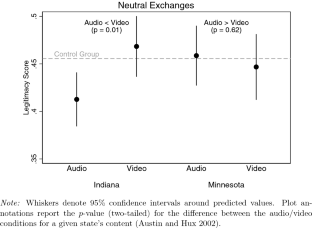
Transparency offers another possible route to improved legitimacy. Greater access to hearings, clearer explanations and more information about the Court’s work could help the public understand its decisions. Experiments involving televised oral arguments found that the way proceedings are presented can affect how legitimate the Court appears, though unrestricted visibility may also encourage strategic behavior or reduce candid deliberation. 2 Transparency is therefore most promising when it is carefully designed rather than treated as an automatic cure.
A governing party could also impose binding disclosure, recusal, reporting and ethics requirements while leaving the Court’s formal structure intact. Comparisons with state supreme courts suggest that binding codes and independent enforcement systems are administratively feasible. But the evidence that these systems would produce a measurable, lasting rise in public trust is more indirect. 4
Internal administration provides a separate, more practical opportunity. Docket management, scheduling, opinion assignments and publication practices can affect how the Court operates without changing who sits on it. Research links docket choices to strategic factors and shows that opinion assignments reflect interactions between the Court, Congress and other branches. Those findings support the view that internal decisions matter, although they do not establish which specific reforms would improve performance or by how much.
The case against
The central problem is that procedural improvements may not overcome polarization or anger about the Court’s actual rulings. Gallup reports historically low evaluations of the Court and unusually wide partisan differences in trust and approval, indicating that the problem is not simply a lack of information about procedures. 5
Studies of *Dobbs* found substantial declines in perceived legitimacy among groups affected by, or opposed to, the ruling. That suggests a major substantive decision can outweigh improvements in ethics, access or presentation. In other words, people may judge the institution mainly by what it decides, not only by how it operates. 6
Accountability also presents a serious weakness. The Court’s 2023 ethics code clarifies expected behavior but lacks an external enforcement mechanism. A voluntary code may therefore do little when allegations concern the justices themselves. Adopting a rule does not prove that it will change conduct or restore trust, particularly if judges resist outside oversight. 7
Consensus-oriented opinions or greater unanimity might improve clarity and institutional presentation in some cases, but they are not a dependable legitimacy strategy. Their effect would depend heavily on the substance and political context of each ruling. Internal leadership may shape how decisions are presented, but it cannot control the broader forces driving public reaction.
The bottom line
The evidence favors a qualified version of the claim, with moderate confidence rather than certainty. A governing party can plausibly improve particular aspects of the Court’s ethics, transparency, accountability and administration without structural changes. The strongest evidence concerns specific mechanisms—such as the link between conflicts and perceptions of impartiality, or between courtroom presentation and public views.
The evidence is much weaker that these measures would create durable, cross-partisan trust. Much remains uncertain about judicial compliance, effective enforcement and the long-term impact of reforms, especially while controversial rulings continue to polarize opinion. Nonstructural changes can improve how the Court works and how some people view it, but they cannot reliably secure broad legitimacy on their own.
Figures & data

All contributions are reviewed for clarity, balance, and evidence. The strongest insights are elevated into the argument graph — with credit to you.
Help improve this analysis →