Should Orchard School District voters approve Measure R? (November 3, 2026 ballot)
What's this about?
People disagree about whether Orchard School District voters should approve Measure R on November 3, 2026.
The measure would raise local tax money for schools for eight years.
What supporters say
- Extra school spending can help students learn more and gain better school services.
- Measure R would give the district about $1.4 million each year for listed school needs.
- Rules, audits, and public reports would help people track how the district spends the money.
- More money for teacher pay or work needs could help schools keep good teachers.
What critics say
- Measure R does not promise better grades, more arts, or more teachers.
- The tax would last eight years, even though school needs might change sooner.
- A tax based on building size could cost some property owners more than others.
- Local taxes like this could give some school areas more money than other areas.
How to read this
The number of points on each side does not show who is right; the strength of the proof matters more.
Measure R would raise a locally controlled, purpose-limited tax for Orchard School District beginning in 2027. Voters must weigh the possible benefits of about $1.4 million a year against uneven tax burdens, uncertain results and an eight-year commitment.
The case for
The strongest argument for Measure R is that it would create a dedicated local funding stream for school needs at a time when California districts have relatively few ways to raise money locally. The county’s impartial analysis estimates that the measure would generate about $1.4 million annually, beginning July 1, 2027, through a levy of four cents per building square foot, subject to maximum charges. The measure limits the money to specified uses, including staffing and academic programs. 1 (see Figure 1)
Research supports the broader idea that additional school funding can improve education. A systematic review found that higher school spending generally improves student achievement, while California research has also found effects when school funding changes. That evidence does not show which Orchard programs would work best, but it makes improved services a plausible outcome. 3
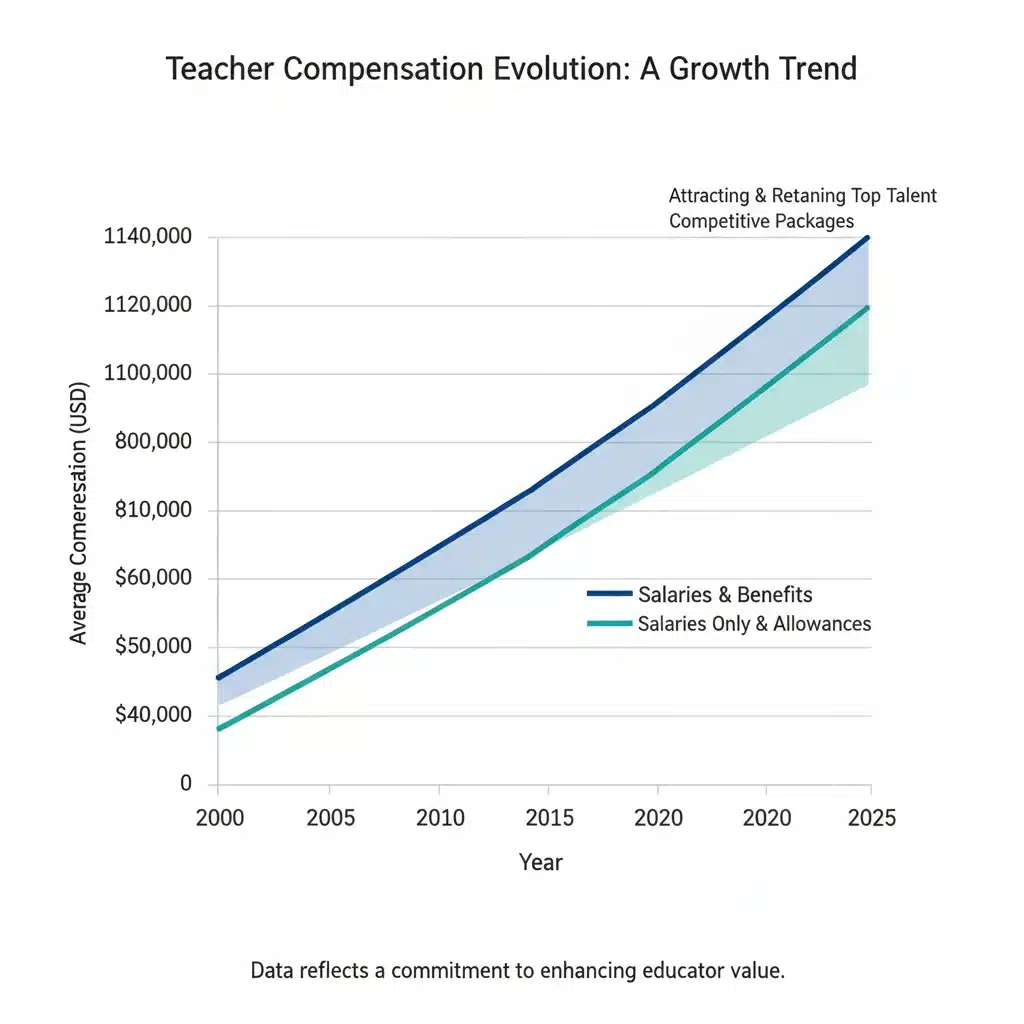
The measure could also help the district recruit and retain teachers if the money supports competitive pay or better working conditions. One peer-reviewed study found that larger salary increases were linked to higher teacher retention above a minimum level. But the study did not measure Measure R, and any benefit could fade as inflation reduces the value of the raises. 2 (see Figure 2)
Measure R includes safeguards. Its money must be used for stated purposes, and audits are required. Those rules would improve transparency and make it harder to divert the funds. They would not, however, prove that student achievement, arts access or staffing actually improved. 4
The case against
The central objection is that Measure R does not guarantee better student outcomes. The official description lays out broad purposes but does not provide a measured starting point, specific program targets or a plan for judging whether the spending causes improvement. Research shows that results depend heavily on how money is used, local conditions and the wider economy. 5
There are also equity concerns. Parcel taxes are generally fixed or based on building size, rather than directly tied to a household’s ability to pay. California policy research identifies limits to that approach. Differences in home values within districts can also shape who bears the burden and how such taxes are approved. The senior exemption would help eligible older homeowners, but it would not make the tax distributionally neutral. 6
Local taxes can contribute to wider differences in school resources because wealthier and less wealthy districts do not have the same ability to raise money locally. Research documents substantial variation in parcel taxes and other local supplements across California districts. That is a structural concern about local school finance, not proof that Measure R would create a specific gap between Orchard and another district. 7
Finally, the levy would last eight years. That offers budget stability but reduces flexibility if enrollment, staffing, state funding or district priorities change. Audits would check whether the money was spent legally, but the measure identifies no performance-based way to end or revise the tax early. 8
- Orchard School District Measure R impartial analysis files.santaclaracounty.gov
- List of local measures vote.santaclaracounty.gov
- Parcel taxes for education in California ppic.org
- Orchard School District Measure R impartial analysis files.santaclaracounty.gov
- Raising the floor: Teacher retention effects of a statewide minimum salary increase files.eric.ed.gov
- Average salaries & expenditure percentage cde.ca.gov
- Orchard School District Measure R impartial analysis files.santaclaracounty.gov
- List of local measures vote.santaclaracounty.gov
- Orchard School District Measure R impartial analysis files.santaclaracounty.gov
- School spending and student achievement: Mechanisms journals.sagepub.com
- School funding and student outcomes: Evidence and limitations aera.net
- California’s parcel tax lincolninst.edu
- Political economy of parcel tax in California school districts journals.sagepub.com
- California’s property tax primer lao.ca.gov
- Orchard School District Measure R impartial analysis files.santaclaracounty.gov
- List of local measures vote.santaclaracounty.gov
Figures & data