Meat consumption must decline dramatically to meet climate targets
Aldo's Synthesis high
Based on the strength of the Arguments below
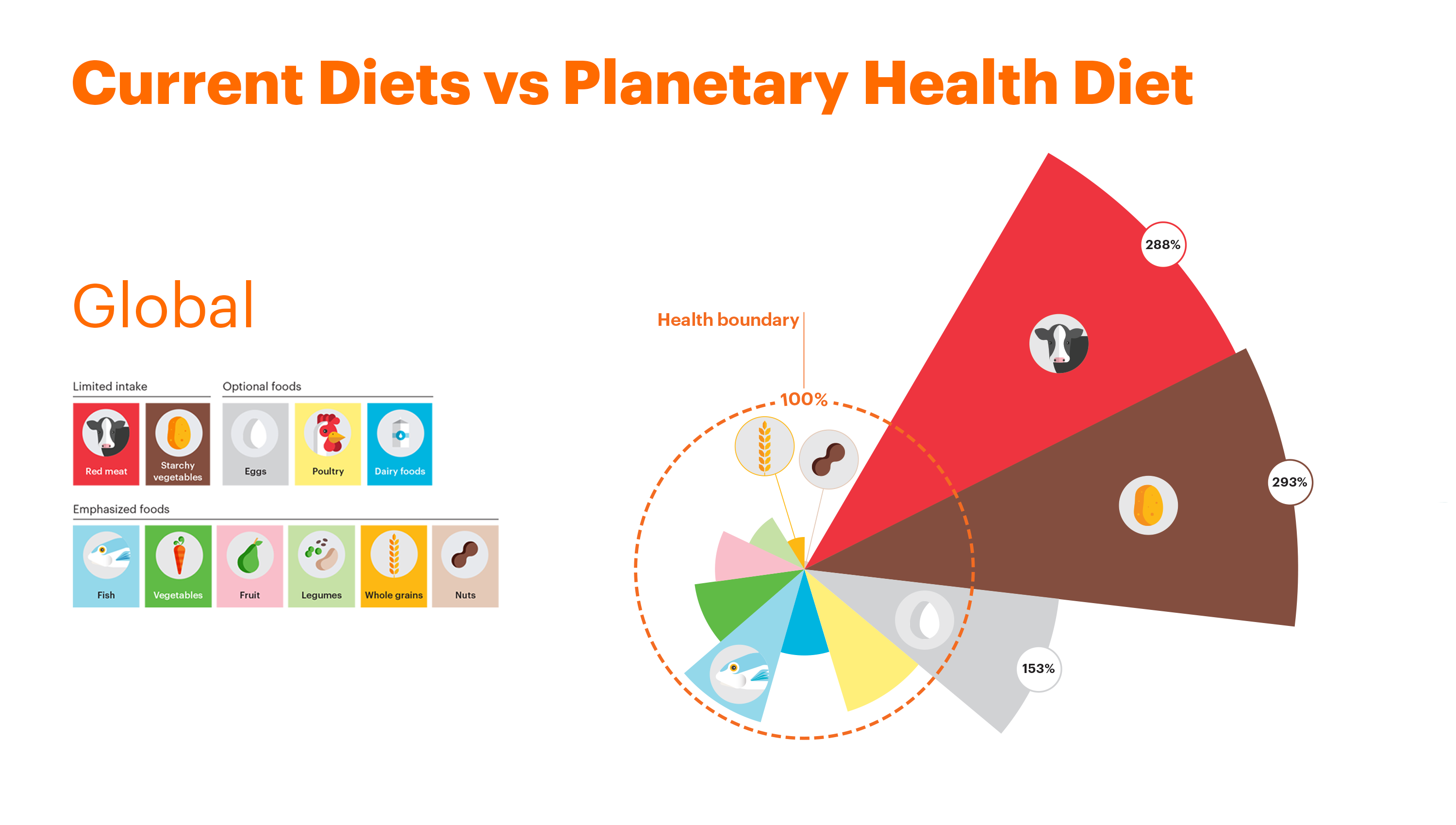
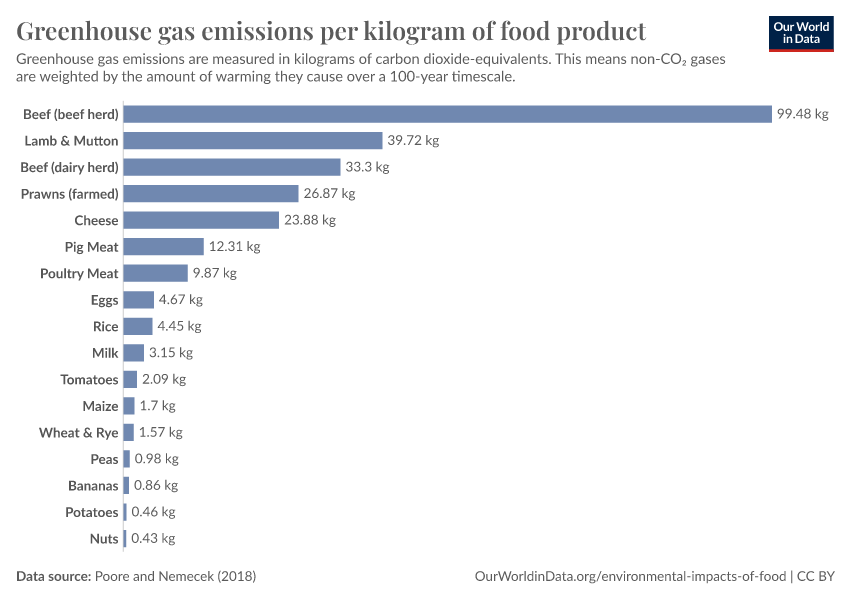
The claim asks whether substantial reductions in global meat consumption—especially beef and lamb in high-consuming populations—are required, rather than merely helpful, to meet the 1.5°C or 2°C climate targets. The dispute has three separable dimensions: whether food-system emissions make demand reduction necessary, whether production technology can substitute for it, and whether “dramatically” can be translated into a universal numerical requirement. The relevant standard is not whether lower-meat diets reduce emissions, but whether the available evidence establishes substantial consumption decline as an indispensable element of pathways consistent with the stated temperature limits. The strongest affirmative case is that ambitious climate pathways repeatedly rely on dietary shifts because projected food emissions are too large to address credibly through production improvements alone. Gas-specific modeling estimated that continuation of current food-consumption patterns could add close to 1°C of warming by 2100, with methane-heavy foods—particularly ruminant meat, dairy, and rice—responsible for a large share. IPCC assessments and food-system pathway modeling accordingly include plant-rich diets and reduced consumption of emissions-intensive animal foods within broader portfolios that also require rapid economy-wide mitigation, cleaner production, reduced waste, and land-use change. The case is particularly strong for ruminant meat because large harmonized life-cycle data show that animal products, especially beef and lamb, generally have much higher greenhouse-gas and land impacts than plant alternatives despite substantial variation among farms (see Figure 2). Even lower-impact animal products often exceed vegetable substitutes, so replacing ruminant meat can achieve reductions that improvements to an average producer do not. FAO estimated livestock agrifood systems at roughly 6.2 gigatonnes of carbon-dioxide equivalent in 2015, about 12% of anthropogenic emissions under its accounting, and concluded that approaching ambitious reductions would require multiple interventions, including changes in demand. The EAT–Lancet Commission likewise modeled a plant-dominant reference diet containing much less red meat than diets in many affluent countries, while treating dietary change, production reform, and waste reduction as jointly necessary for remaining within multiple environmental boundaries (see Figure 1). Demand reduction also addresses constraints that technical methane control cannot fully remove. The Global Methane Assessment judged rapid methane reduction essential for limiting near-term warming and found that much agricultural methane lacks inexpensive technical abatement, leading it to include healthier diets with less animal-source food in high-consuming regions among the relevant measures. Feed, breeding, health, and productivity interventions offer meaningful reductions, but variable performance, adoption constraints, and the distinction between emissions intensity and total emissions limit their ability to guarantee absolute reductions while output grows. Nor can grazing-related soil carbon generally be presumed to neutralize continuing ruminant emissions, because sequestration is context-dependent, reversible, and constrained by saturation. The strongest objection is not that meat reduction lacks climate value, but that the evidence does not establish one universally mandatory, dramatic reduction in total meat consumption. The cited pathways combine diet with production improvements, waste reduction, and other mitigation levers rather than prescribing meat elimination or an invariant quota for every country. Even the modeling that projects close to 1°C of food-related warming finds that production improvements, methane cuts, dietary change, and waste reduction each reduce the projection, making the required dietary contribution contingent on the performance of the other measures. Technical mitigation can materially reduce the consumption decline needed for a given emissions outcome, although it does not presently demonstrate that demand change can be avoided. A meta-analysis found that several feed and rumen-management strategies lower enteric-methane yield or intensity, with effects varying by intervention, diet, and production system. Its relevance to total emissions remains conditional on durability, cost, access, adoption, and whether lower intensity is accompanied by stable rather than expanding output. Gas-specific climate accounting further qualifies claims that livestock emissions are interchangeable with fossil carbon dioxide. Because methane is short-lived, stable methane emissions cause much less additional warming than sustained carbon-dioxide emissions, whereas declining methane can reduce warming; conventional GWP100 comparisons do not fully capture that contrast. This distinction weakens simple assertions that livestock exhausts a carbon budget in precisely the same manner as carbon dioxide, but it does not make continued methane emissions harmless or negate the near-term benefit of reducing them. Variation among grazing and beef systems also defeats the premise that every unit of meat has the same climate consequence. A synthesis of beef life-cycle assessments found substantial differences across management systems and regions and therefore meaningful room for improved management, while also finding that lower-impact systems did not eliminate beef’s climate burden. Soil-carbon gains can improve particular systems’ net balance, but measurement difficulty, saturation, and reversibility prevent treating sequestration as a permanent general offset. The evidence supports a narrower and more differentiated version of the claim most strongly: large reductions in beef and lamb consumption among affluent, high-consuming populations are better supported than an undifferentiated global reduction in every meat category. The EAT–Lancet reference diet contains much less red meat than diets in many affluent countries, while the Global Methane Assessment expressly directs animal-food reductions toward high-consuming regions. By contrast, IPCC pathway evidence indicates that the dietary contribution varies among models, so it does not supply one invariant requirement across populations with different baselines and circumstances. Dietary change is best understood as one component of a combined mitigation strategy, not as a substitute for decarbonizing energy or improving agriculture. Food-system models achieve their largest improvements through portfolios that combine dietary shifts with production efficiency, cleaner energy, methane abatement, waste reduction, and sequestration. The IPCC therefore characterizes shifts toward balanced, sustainable diets with less emissions-intensive animal food as having substantial mitigation potential within a broad demand-side portfolio, rather than prescribing universal meat elimination. The direction of effect is better established than the numerical meaning of “dramatically.” A scoping review found plant-based dietary patterns generally associated with lower greenhouse-gas emissions and land use, with larger benefits when they displace ruminant meat, but heterogeneity in dietary definitions and life-cycle methods limited exact quantitative comparisons. Modeling of dietary guidelines similarly supports stronger reform but depends on life-cycle inventories, counterfactual diets, and modeled rather than observed worldwide adoption. The scale described as necessary consequently changes with the temperature target, baseline diet, assumed technological progress, waste reduction, population, and the performance of other mitigation levers. The main evidentiary limitation is not an absence of relevant research, but the gap between scenario-based mitigation potential and proof of one necessary global consumption threshold. The bundle does not provide a single harmonized estimate of the minimum meat reduction required under otherwise identical 1.5°C and 2°C assumptions, nor observed evidence of worldwide adoption at the scales modeled. It also leaves unresolved how future costs, durability, and global uptake of livestock technologies would change that minimum, and the supplied classification flags unresolved conflict-of-interest classifications as a remaining uncertainty. These gaps counsel against converting illustrative reference diets into a universal legal-like quota, but they do not erase the consistently identified mitigation advantage of reducing emissions-intensive meat where consumption is high. On balance, the evidence supports the claim with high confidence when it is read as requiring substantial reductions in beef and lamb consumption among high-consuming populations within a broad mitigation portfolio, but not when read as imposing one dramatic, uniform cut in all meat consumption worldwide. Confidence in the broad direction rests on convergence among institutional assessments, peer-reviewed pathway studies, methane analysis, and large life-cycle datasets showing both the importance of food emissions and the unusually high impacts of ruminant meat. The dominant substantive uncertainty is the scale of reduction that remains necessary after accounting for regional baselines, technological adoption, waste reduction, and other mitigation choices; the unresolved conflict-of-interest classifications add a secondary source-assessment uncertainty.
Supporting Arguments
P1Business-as-usual food emissions threaten the remaining climate budget
Food-system modeling indicates that current trajectories can consume enough of the remaining warming budget to jeopardize both 1.5°C and, eventually, 2°C. Because high-emitting animal foods are a major source, substantial reductions in their consumption are a powerful component of a viable mitigation portfolio.
67/100 · Direct Evidence
P2Ruminant meat has an unusually high emissions and land footprint
Large life-cycle datasets find that beef and lamb generally impose much higher emissions and land use than plant proteins, even after accounting for wide differences among farms. Consequently, replacing ruminant meat usually delivers larger reductions than marginally improving an average producer.
71/100 · Data Analysis
P3Rapid methane cuts make reducing cattle and sheep demand valuable
Agricultural methane has a strong near-term warming effect, and technical abatement is not available or economical for every animal and production system. Lower demand for ruminant products in high-consuming populations can therefore complement feed, manure and productivity measures and reduce warming relatively quickly.
75/100 · Direct Evidence
P4Production improvements alone are unlikely to offset demand growth
FAO and farm-level evidence identify large efficiency opportunities, but livestock emissions remain substantial and lower-impact animal products commonly exceed plant substitutes. If global animal-product consumption keeps rising, efficiency gains risk being outweighed by greater output.
62/100 · Logical Inference
P5Major assessments include plant-rich diets in ambitious pathways
IPCC, UNEP and food-system studies repeatedly include shifts toward plant-rich diets and away from emissions-intensive animal foods among high-potential mitigation measures. Their convergence makes the broad direction robust, even though the required scale varies among models and regions.
73/100 · Expert Opinion
Opposing Arguments
C1Climate targets do not impose one universal meat-reduction quota
Integrated pathways combine energy decarbonization, agricultural technology, waste reduction, yield improvements, land restoration and dietary shifts in different proportions. The evidence therefore does not prove that every country or population must make the same 'dramatic' cut in total meat consumption.
70/100 · Logical Inference
C2Technical mitigation can lower livestock emissions without equal output cuts
Feed interventions, breeding, animal health, productivity improvements and manure management can reduce methane or emissions intensity while maintaining animal-food production. If these technologies achieve broad, durable adoption, the consumption decline required for a given target could be smaller than diet-only scenarios imply.
69/100 · Direct Evidence
C3Methane is not climatically equivalent to cumulative carbon dioxide
Because methane is short-lived, stable methane emissions do not produce the same continuing temperature increase as stable CO2 emissions. Metrics that treat all emissions through GWP100 can obscure this distinction, so claims about livestock exhausting carbon budgets require gas-specific interpretation.
53/100 · Direct Evidence
C4Some grazing systems can improve their net emissions balance
Management changes and soil-carbon gains can reduce the net footprint of particular grazing systems, and beef footprints differ substantially across regions. These cases weaken blanket claims that all meat has the same climate consequence, although sequestration generally cannot permanently offset ongoing ruminant emissions.
88/100 · Direct Evidence
All contributions are reviewed for clarity, balance, and evidence. The strongest insights are elevated into the argument graph — with credit to you.
Help improve this analysis on ProConWiki →