Lithium mining in South America has more negative than positive impacts on the local environment
What's this about?
People disagree about whether lithium mining in South America harms local nature more than it helps. The answer may differ from place to place.
What supporters say
- We do not yet know the full harm from many mines working near the same water system.
- Mines may change water flows, which can harm wetlands and animals such as flamingos.
- Dry salt flats have very little water, so pumping water may cause serious stress.
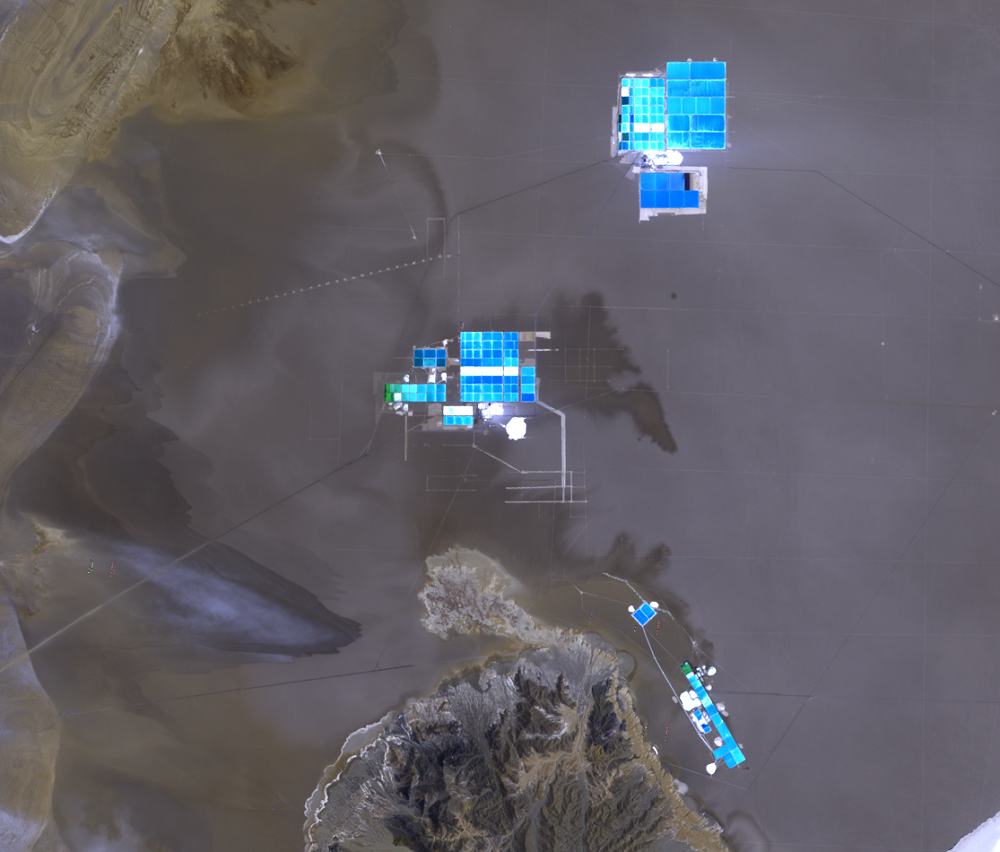
- Ponds, roads, pipes, and power sites can take land, split up habitats, and leave waste.
What critics say
- Brine lithium may cause less harm across the world than some other ways to get lithium.
- New mining methods might use less land and water, which could lower harm.
- Some mines face checks and rules that aim to limit harm and fix problems.
How to read this
The number of points on each side does not show who is right; strong proof matters more than a long list.
The bottom line
The claim seems likely in some places, but scientists have not proved it for all of South America. The strongest worry is harm to linked water systems and wetlands, while the full combined harm remains unclear.
The claim that lithium mining in South America harms local environments more than it helps is plausible, but not proven uniformly across the region. The strongest concerns involve water systems, wetlands and incomplete information about cumulative effects.
The case for
South America’s lithium deposits are often found in extremely dry salt-flat basins, where water systems are especially fragile. Pumping brine and freshwater can change groundwater flows and reduce water availability. Scientists caution, however, that it is not always possible to separate mining’s effects from those of drought, evaporation, farming, tourism and other water users. 1
The ecological stakes are high because Andean wetlands, springs and groundwater systems can be closely connected. These wetlands support specialized wildlife, including flamingos, and depend on stable water levels and food supplies. Research identifies possible risks to flamingo habitat and other wetland functions, although the precise causes of observed changes—and whether damage can be reversed—remain difficult to establish. 2
A major concern is that the combined effect of many projects is poorly measured. Studies point to incomplete environmental baselines, uncertain links between groundwater and wetlands, uneven assessment standards and limited long-term tracking. That makes it difficult to calculate the total ecological cost of mining across South America, particularly as individual projects may affect the same interconnected water systems. 3
Mining also creates direct pressures that do not depend entirely on disputed groundwater claims. Evaporation ponds, roads, pipelines, power facilities and chemical-handling areas occupy land and can fragment habitat. They may also generate dust, waste, salt or chemical residues and disturbance, with the scale varying from one site to another (see Figure 2). 4
Taken together, these findings support a precautionary argument: where ecosystems are highly sensitive and the cumulative effects are not well understood, it is difficult to show that local environmental benefits outweigh the potential harms.
The case against
Lithium production is not environmentally identical across all extraction methods. Life-cycle studies indicate that extracting lithium from brine can use less energy and produce fewer greenhouse-gas emissions than some hard-rock mining routes. Lithium also supports batteries and other clean-energy technologies. 5 These are real benefits, but they are mainly global or life-cycle advantages rather than proof of a net ecological benefit in a particular salt-flat ecosystem.
Some operations are monitored and regulated. In Chile, authorities require monitoring of groundwater, wetlands, vegetation and wildlife, while companies report mitigation and compliance measures. New approaches, including direct lithium extraction, could reduce the need for large evaporation ponds and might lower water use. 67 But monitoring does not prove that ecological harm is absent or outweighed, and direct extraction has not yet been demonstrated over the long term across South America.
The region also cannot be treated as one environmental case. Deposits, water systems, mining technologies, regulations and community relationships differ between Chile, Argentina and Bolivia. Evidence from the Salar de Atacama, for example, cannot automatically establish the net effects of every lithium operation in the region.
The bottom line
The evidence favours the claim, but only moderately and as a precautionary judgment. There is strong support for the view that lithium extraction creates significant local environmental risks in at least some South American salt flats, especially through possible changes to water systems and wetlands. The evidence is weaker for the broader conclusion that these harms exceed all local environmental benefits across South America.
The central uncertainty is not whether risks exist. It is whether particular ecological changes can be clearly attributed to lithium mining, measured over the long term and combined across very different sites and technologies. Global climate benefits, lower emissions from some brine operations and possible future improvements in extraction do not by themselves establish a positive local environmental balance. Therefore, the claim is somewhat supported, but not conclusively demonstrated as a uniform regional finding.
Figures & data
All contributions are reviewed for clarity, balance, and evidence. The strongest insights are elevated into the argument graph — with credit to you.
Help improve this analysis →