Israeli settlers exert influence over West Bank military decision-making
What's this about?
People disagree about whether Israeli settlers shape army choices in the West Bank.
The claim has some support, but the proof is clearer for rules and land control.
What supporters say
- Settler goals help shape roads, watch posts, checks, and army guard work near their homes.
- Reports show many attacks by settlers, while police often do little to find or charge those at fault.
- Settler groups and their allies in the state can push leaders to support their goals.
What critics say
- The state and army still hold the legal power to give orders and run army work.
- The proof seldom shows that a settler asked for one exact army order and caused it.
How to read this
The number of points on each side does not show who is right; strong proof matters more.
The bottom line
The proof partly supports the claim, mainly for rules, land use, guard work, and law checks.
Both sides have points here, but the proof does not clearly show direct settler control of army orders.
The claim that Israeli settlers influence military decision-making in the West Bank is partly supported, but its strength depends on what “influence” means. The evidence points more clearly to influence over policy, territorial administration and enforcement than to direct control of specific military orders.
The case for
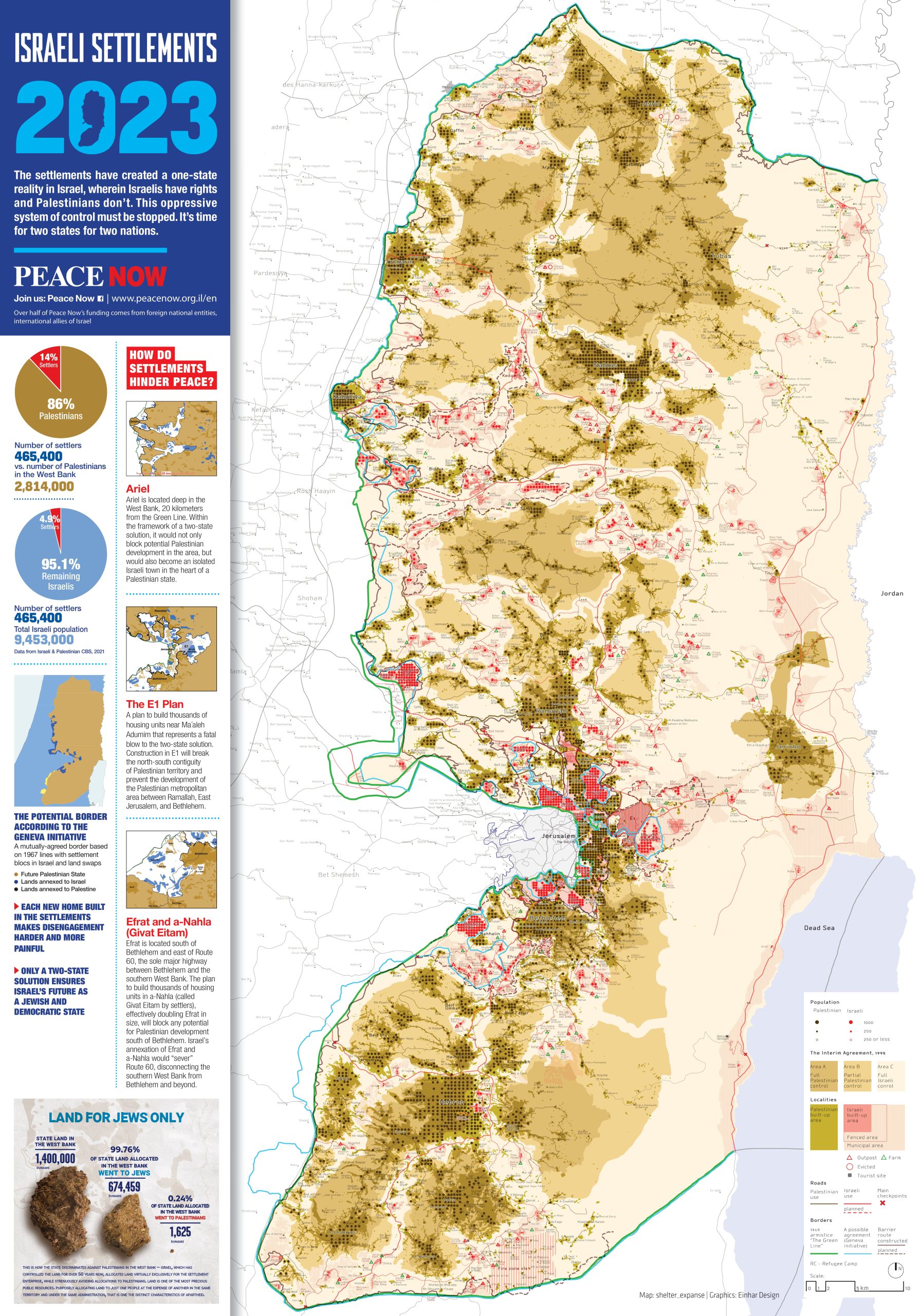
Settlement interests are built into the way the West Bank is planned and governed. Research describes settlement expansion as part of wider metropolitan planning, while other institutional studies document the roads, checkpoints and security arrangements created to protect settlements and their access routes. Together, these findings suggest that settler priorities help shape where military resources and protection are directed, even when government institutions retain formal control 1. The broader growth of settlements and the infrastructure supporting territorial control provide context for this connection (see Figure 3).
Political access offers another route for influence, although the evidence is less direct. Government decisions on settlement and land policy, advocacy by elected officials on behalf of settlers, and research on settler nationalism all show that settler interests can align with — and reach — state policy 2. But these sources do not prove that a military commander issued a particular order because a settler demanded it.
Patterns of violence and weak accountability also fit the claim. United Nations data record recurring incidents involving settlers and their effects on Palestinians, while civil-society research reports very low rates of investigation and prosecution in cases involving Israeli civilians and Palestinian victims. This is consistent with institutional tolerance, weak enforcement or the prioritisation of settler protection, though it does not establish one unique cause 3. The trend in reported incidents and its implications for protection and enforcement are shown in the underlying UN data (see Figure 2).
The strongest version of the argument, then, is not that settlers command the military. It is that their interests and actions can affect the policy environment, the allocation of protection and the enforcement choices made in the West Bank.
The case against
Formal authority remains with the Israeli state and military. Legal analysis identifies the military commander as the official authority for major West Bank measures, including land requisition. The Israeli government’s own institutional position likewise presents settlement policy as a matter for the government, not as an area controlled by settlers 4.
The evidence also rarely demonstrates direct cause and effect. Reports and broader studies often show political alignment, geographic patterns or unequal outcomes, but not a documented chain in which a settler request led to a named military order and a specific change in deployment or enforcement 5. A peer-reviewed study examining violence, displacement, settlement and military control identifies important patterns, but its broad, observational approach cannot show whether settlers changed a commander’s operational decision. News reports describe disputes and pressure, but generally do not provide independently verified proof of causation.
Unequal enforcement and settler violence may also have other explanations. They could reflect military doctrine, government policy, administrative practice, prosecutorial failure or the military’s own judgment. Because many available sources are official statements, advocacy reports, aggregate data or institutional analyses, they are useful for identifying patterns but cannot by themselves determine whether apparent alignment resulted from settler influence or from shared ideology and established policy.
The bottom line
The evidence moderately supports the claim in a broad sense. Settlers appear to influence settlement-related policy, territorial administration, protection priorities and enforcement outcomes. The case is strongest where settlement interests are already embedded in state planning and security arrangements.
But the evidence does not show that settlers hold formal authority or routinely dictate specific military operations. The central gap is the absence of transparent, case-level evidence linking a settler demand, political intervention or violent act to an identifiable military order. In short, the sources show institutional alignment and consequences more convincingly than they show the precise decision-making path behind them.
Pros — Supporting Arguments
Cons — Opposing Arguments
Figures & data


All contributions are reviewed for clarity, balance, and evidence. The strongest insights are elevated into the argument graph — with credit to you.
Help improve this analysis →