Healthcare AI will reduce misdiagnosis
What's this about?
People disagree about whether AI, or computer systems that spot patterns, will greatly cut wrong or missed illness checks.
AI may help doctors find some problems, but we do not yet know if it will improve all of healthcare.
What supporters say
- AI can spot clues in scans or tests that a doctor may miss.
- It has done well in focused jobs, such as eye checks, bowel checks, and chest X-ray checks.
- In one bowel study, AI helped find more small growths that can turn into cancer.
- AI can act as a second reader, sort urgent cases first, and help clinics with few experts.
What critics say
- Most proof comes from narrow jobs, not from all the many ways doctors check illness.
- Good results from old test sets do not prove AI will work as well in real clinics.
- AI works best when it helps doctors, rather than takes their place.
- We do not yet have proof that AI will greatly cut wrong or missed checks across all healthcare.
The bottom line
AI can help prevent some missed problems in clear, repeatable tasks.
But the proof does not yet show that it will greatly reduce wrong or missed checks everywhere.
Healthcare AI is likely to prevent some missed diagnoses in carefully defined settings, particularly when it helps clinicians rather than replaces them. But the evidence does not yet show that AI will significantly reduce misdiagnosis across healthcare as a whole.
The case for
AI has shown its clearest strengths in narrow, repeatable tasks such as reading medical images and screening for particular diseases. In these settings, it can flag signs that a clinician may overlook, providing a second set of eyes and reducing missed findings. Studies have reported strong results in diabetic-retinopathy screening, colonoscopy and chest X-ray review. A review of computer-aided colonoscopy, for example, found higher detection of adenomas and lower rates of missed lesions 1.
Mammography offers another example of the potential. In international retrospective datasets, one AI system produced fewer false positives and false negatives than the radiologists it was compared with. That does not prove a broad improvement in healthcare, but it suggests AI can reduce specific interpretation errors in screening (see Figure 1).
The strongest practical case is for AI as an assistant, second reader or triage tool. A validated system can apply screening rules consistently, help prioritize urgent cases and extend specialist-level detection into primary-care settings with limited access to experts. A later review and meta-analysis found AI performed as well as, or better than, clinicians on selected medical-imaging tasks, reinforcing the idea that it can improve performance when the task and conditions are suitable (see Figure 2) 2.
Automation may also make routine screening more consistent. Tools that assess retinal photographs, mammograms, colonoscopy video or other standardized signals can apply the same criteria repeatedly, without fatigue or variation between readers 3. For these focused tasks, the evidence points to meaningful benefits.
The case against
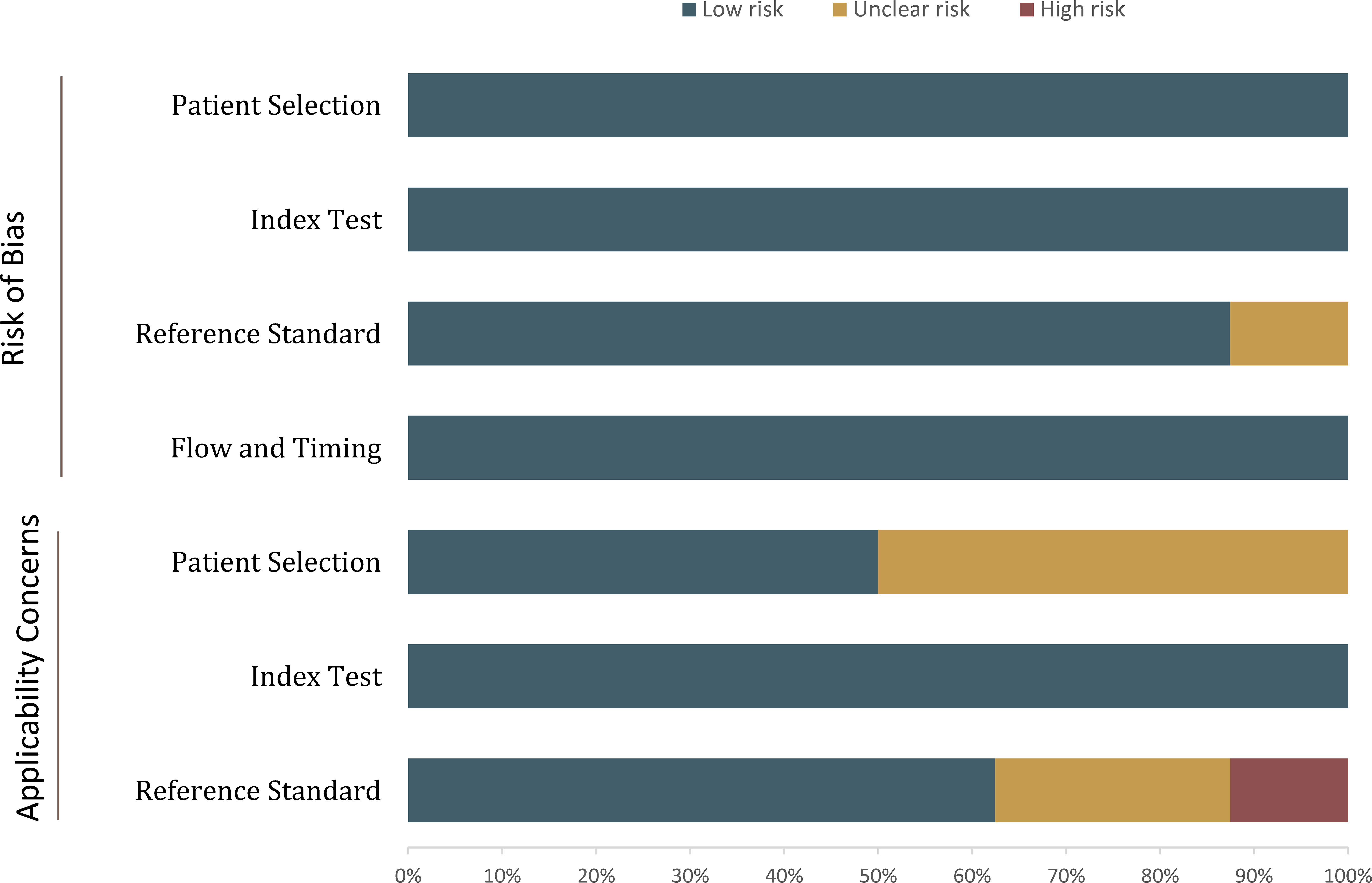
The central problem is that high accuracy in a study is not the same as fewer real-world misdiagnoses. Much of the research on diagnostic AI relies on retrospective datasets rather than trials in everyday clinical practice. Reviews have found relatively few randomized studies that measure patient outcomes, while also identifying risks including overfitting, selective reporting and weak outside validation 4.
A model that works well in its original dataset may perform less well when used with different scanners, patient populations, disease rates, medical records or clinical workflows. Its performance can also change after deployment as conditions shift. Regulators have highlighted this risk of “drift,” meaning a system’s accuracy may deteriorate over time unless it is closely monitored 7.
AI can create new errors as well as prevent old ones. Experimental studies show that clinicians and radiologists may be swayed by incorrect AI recommendations, a tendency known as automation bias. In other words, a wrong machine suggestion can change a doctor’s judgment rather than simply provide helpful backup (see Figure 3) 6.
There is also a risk that average accuracy conceals unequal results. Chest X-ray algorithms have been shown to underdiagnose disease among underserved groups. Separately, a widely used healthcare algorithm produced racial disparities because it used healthcare spending as a stand-in for medical need. These cases show that AI can reproduce or worsen existing inequities if its data and design are not carefully checked 5.
Diagnosis is also more than interpreting a single image. It includes clinical judgment, follow-up tests, referrals and treatment decisions. The most useful comparison, therefore, is not an AI model against a specialist in isolation, but an AI-supported clinical workflow against usual care. Evidence on that broader, patient-level question remains limited.
The bottom line
The evidence supports a high-confidence but qualified conclusion: healthcare AI will probably reduce some diagnostic errors when it is used as a validated assistant for specific tasks, especially standardized image- and signal-based screening.
However, current research does not establish that AI will significantly reduce misdiagnosis across healthcare overall. The biggest gap is the lack of prospective studies showing that better test accuracy leads to lasting, net improvements for patients in real clinical settings.
Any claim of benefit should be tied to a particular task, population and workflow. AI systems need representative data, human oversight, independent checks and continued monitoring for performance drift, overreliance and unequal effects across patient groups.
Figures & data


All contributions are reviewed for clarity, balance, and evidence. The strongest insights are elevated into the argument graph — with credit to you.
Help improve this analysis →