Electric vehicles are not as green as marketed

Updated 2026-07-30 6 supporting · 6 opposing arguments
Aldo's Synthesis high
Based on the strength of the Arguments below
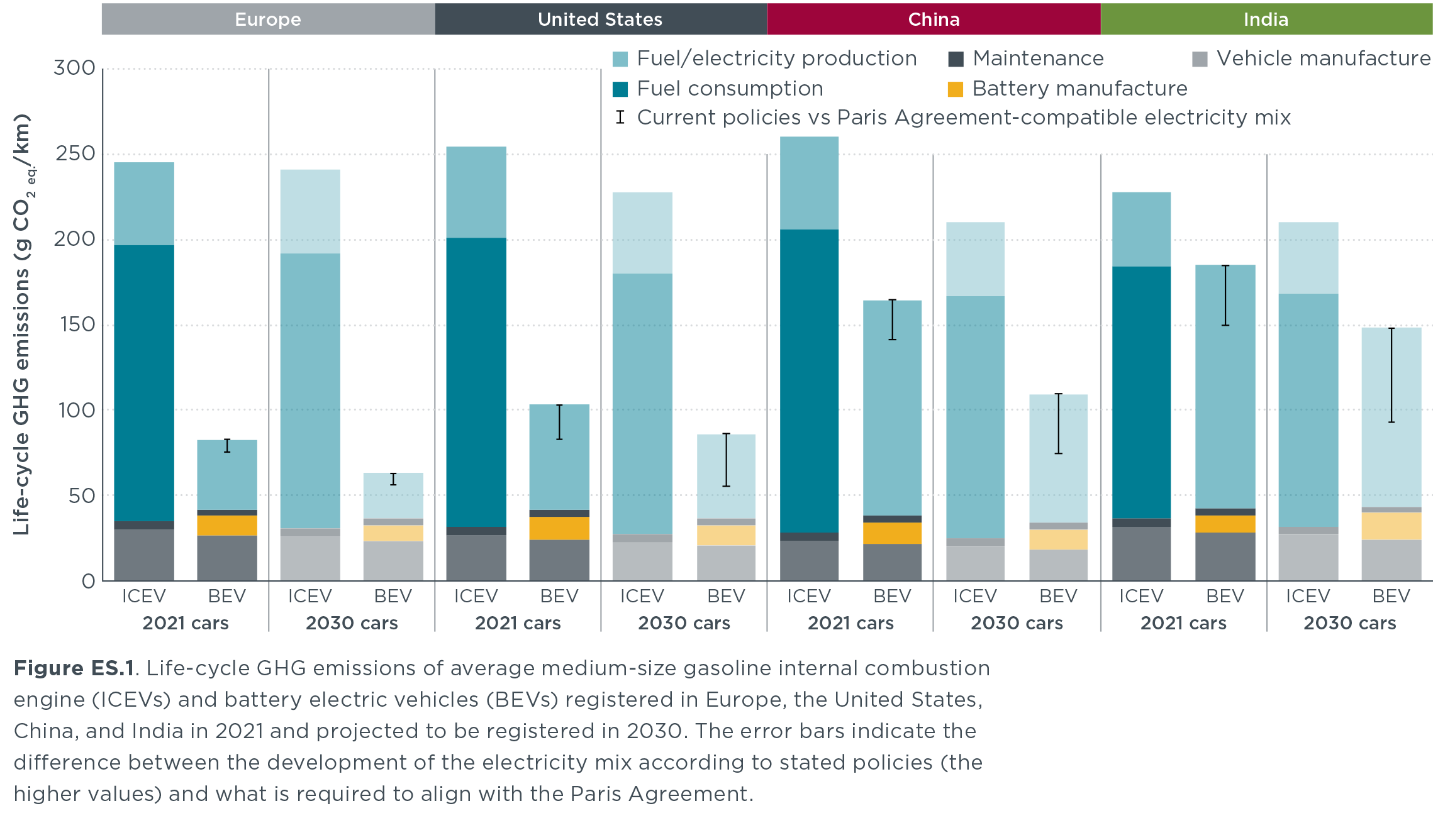
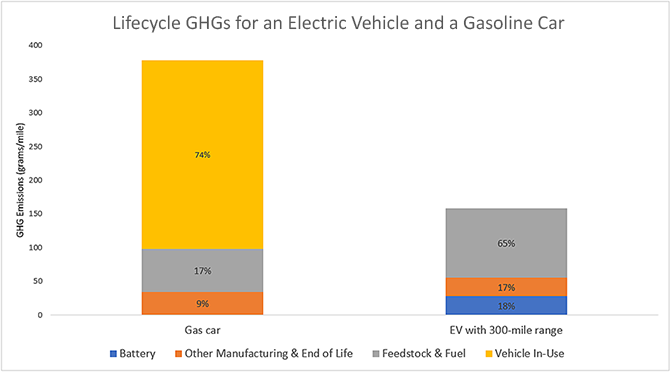
The claim asks whether electric vehicles’ environmental credentials are materially overstated once their full life cycle and multiple kinds of harm are considered, while allowing that they may still outperform comparable combustion vehicles overall. The dispute therefore turns on both the comparison being made—zero impact versus relative improvement—and the scope of the environmental scorecard, including climate, air pollution, resource depletion, ecological damage, and labor conditions. A sound assessment must distinguish criticism of simplified marketing from the stronger—and separately testable—proposition that electric vehicles are generally no better than equivalent combustion vehicles. The strongest support for the claim is that tailpipe-focused or “zero-emission” descriptions omit consequential upstream burdens: battery production, electricity generation, mineral processing, and end-of-life treatment all create emissions or other impacts (see Figure 3). Battery-electric vehicles generally begin with higher manufacturing burdens than comparable combustion cars because traction batteries require additional materials and energy, although the size of this initial disadvantage varies with battery capacity, chemistry, production efficiency, and factory electricity. Consequently, large vehicles with oversized batteries are harder to characterize as uniformly green than smaller models, even though that production burden does not by itself determine lifetime performance. Mineral and battery supply chains add ecological and social costs that vehicle-use emissions alone cannot reveal. Amnesty International documented hazardous artisanal cobalt mining and child labor in the Democratic Republic of the Congo and traced cobalt into supply chains serving battery users, including electric-vehicle manufacturers. Battery-production carbon intensity also spans a wide range with factory energy and electricity supply, which means neither very high historical estimates nor unusually clean contemporary estimates should be generalized to every battery. A climate advantage is not equivalent to superiority on every environmental indicator. Life-cycle research identifies battery manufacture as a major source of production impacts and finds results sensitive to chemistry, manufacturing energy, vehicle efficiency, lifetime mileage, electricity mix, and system boundaries. Road transport also continues to emit particles through tire wear, brake wear, road-surface abrasion, and resuspended dust, so electrification alone does not eliminate traffic particulate pollution. Higher vehicle mass may worsen tire-related emissions, although regenerative braking complicates any blanket claim that electric vehicles produce more of every non-exhaust pollutant. The electricity supplying charging can materially erode an electric vehicle’s climate and health advantage. A United States assessment found regional variation in health outcomes because both the generating mix and the location of power-sector emissions determine population exposure; fossil-heavy marginal generation can reduce or sometimes reverse benefits. Scenario analysis likewise shows that carbon-intensive power, larger batteries, and unfavorable vehicle or lifetime assumptions narrow the greenhouse-gas advantage, undermining any universal environmental claim. The strongest challenge is that full life-cycle accounting usually strengthens rather than eliminates the case for electric vehicles on climate performance. A peer-reviewed analysis found lower life-cycle emissions for electric cars than new gasoline cars in 53 of 59 world regions, covering about 95% of global road-transport demand, with exceptions concentrated in especially carbon-intensive electricity systems. The U.S. Environmental Protection Agency similarly states that the larger manufacturing footprint caused by battery production is typically compensated by lower operating emissions over the vehicle’s lifetime. Thus, evidence that electric vehicles can perform worse on toxicity, eutrophication, ecotoxicity, or metal depletion does not establish that upstream greenhouse-gas emissions normally erase their climate benefit. The initial manufacturing “carbon debt” is generally a temporary disadvantage rather than a complete life-cycle verdict. The European Environment Agency found that battery-electric vehicles generally have lower life-cycle greenhouse-gas emissions and local air-pollution impacts under the European electricity mix despite higher production burdens. Recycling can also recover valuable materials and displace some virgin extraction, although technical, logistical, safety, and economic constraints prevent it from eliminating the battery footprint. Lower use-phase emissions can repay the production gap relatively early, and cleaner electricity can improve vehicles already in service. An updated ICCT assessment estimated that a representative battery-electric car sold in the European Union in 2025 had about 73% lower life-cycle greenhouse-gas emissions than a gasoline car and offset its higher production emissions after roughly 17,000 km, subject to modeled lifetime and grid assumptions (see Figure 1). Unlike a combustion vehicle, whose operating emissions remain tied to liquid fuel, an electric vehicle’s use-phase footprint can decline as its power system decarbonizes. These findings directly rebut the broad inference that battery manufacture and electricity generation generally make electric cars as carbon-intensive as gasoline cars (see Figure 2). Electric vehicles also remove street-level tailpipe nitrogen oxides and exhaust particles, which can improve exposure conditions even though power-sector and non-exhaust pollution remain. The net health effect depends on grid composition and where generating emissions occur, but pollution shifted to power plants is not necessarily equivalent in exposure to exhaust released along populated streets. Moreover, regenerative braking can substantially reduce friction-brake use and associated particles, while supply-chain impacts vary enough by geography, electricity source, chemistry, and technology to permit meaningful improvement. Present-day battery harms are therefore serious but not technically fixed characteristics of electric propulsion. The IEA identifies smaller batteries, alternative chemistries, cleaner manufacturing, due diligence, reuse, and recycling as means of substantially reducing environmental and social supply-chain risks. Recycling outcomes still depend strongly on process design, energy inputs, recovered materials, and the primary production displaced, so mitigation should not be confused with impact elimination. The claim’s validity depends chiefly on what “green” and “as marketed” are taken to mean. If the benchmark is zero environmental impact, the claim is strongly supported because electric vehicles retain production, electricity, material, and non-exhaust burdens. If the benchmark is environmental preference over an equivalent new combustion car, life-cycle climate evidence generally favors the electric vehicle, with exceptions in highly carbon-intensive regions. That relative climate advantage does not justify an unqualified claim of broad environmental harmlessness, especially where battery production or vehicle mass is high. Vehicle size, battery size, electricity mix, sourcing practice, and lifetime use are material boundary conditions, not peripheral qualifications. The IEA and ICCT findings show that cleaner electricity and sufficient lifetime mileage improve results, whereas larger vehicles and batteries increase burdens or delay recovery of the production gap. Cobalt-related risks also differ by chemistry and sourcing because some newer battery chemistries reduce or eliminate cobalt. Fair comparisons should therefore match vehicle class and realistic lifetime use rather than comparing an average electric vehicle with an unusually efficient combustion car, or vice versa. Life-cycle estimates are directionally consistent but numerically sensitive to modeling choices. Independent global, institutional, and European analyses agree that electric cars usually reduce life-cycle greenhouse gases, but their estimated advantage and break-even distance vary with grid pathways, vehicle size, battery production, lifetime distance, and other assumptions. End-of-life credits are also conditional because recovery quality, pack design, chemistry, logistics, safety, and economics affect how much primary extraction recycling can actually displace. The bundle supports all expected sections, but it does not provide a defined sample of actual advertising claims against which the phrase “as marketed” can be measured. Accordingly, the evidence can assess whether common zero-emission framings are incomplete, but it cannot establish how prevalent, specific, or misleading particular marketing representations are. The evidence also lacks a common decision rule for aggregating climate change, toxicity, biodiversity, water use, resource depletion, local air pollution, and labor harms into one environmental verdict. Without explicit weighting, evidence of a large climate benefit and evidence of serious non-climate costs can coexist without yielding a uniquely determined meaning of “greener overall.” Source conflict-of-interest classifications remain unresolved, which limits confidence in judgments about institutional independence even though the bundle includes peer-reviewed, governmental, institutional, and analytical source types. On balance, the claim is supported as a criticism of zero-impact or tailpipe-only marketing, but not as a general denial that electric vehicles usually outperform comparable combustion vehicles on life-cycle greenhouse-gas emissions. Confidence in that balanced judgment is high because multiple source types converge on both propositions: electric vehicles have substantial upstream and non-climate burdens, yet generally retain a life-cycle climate advantage that varies by vehicle, grid, production pathway, and use. The dominant uncertainty is not the broad direction of the climate comparison, but the undefined marketing benchmark and the absence of an agreed method for weighing climate gains against other environmental and social harms; unresolved conflict-of-interest classifications add a secondary limitation.

Supporting Arguments

P1Zero-emission marketing omits upstream pollution
EVs have no tailpipe exhaust, but battery manufacture, mineral processing, electricity generation, and end-of-life treatment all create emissions and other impacts. Government and life-cycle sources explicitly caution that 'zero emission' describes vehicle operation, not the complete product system.
72/100 · Direct Evidence
P2Battery production gives EVs a larger initial footprint
Producing traction batteries generally makes EV manufacturing more carbon- and resource-intensive than producing comparable combustion cars. The size of that disadvantage varies widely with battery capacity, chemistry, factory efficiency, and manufacturing electricity, making large-battery models harder to characterize as uniformly green.
71/100 · Direct Evidence
P3Mineral extraction carries ecological and human-rights costs
Lithium-ion supply chains impose water, land, emissions, biodiversity, and toxicity burdens, while cobalt sourcing has been associated with hazardous work and child labor in the DRC. These harms are poorly captured by advertisements focused on tailpipe emissions, though they differ by chemistry and sourcing practice.
59/100 · Direct Evidence
P4EVs do not eliminate road-particle pollution
Electrification removes exhaust particles but not tire wear, road wear, or resuspended dust. Higher vehicle mass may increase some non-exhaust emissions, so replacing heavy combustion vehicles with heavy EVs does not resolve every urban pollution problem.
71/100 · Direct Evidence
P5Coal-heavy charging can erode the climate and health advantage
EV benefits depend on which generators supply charging and where their pollution occurs. Research identifies a minority of carbon-intensive regions where life-cycle emissions may exceed those of efficient conventional cars, while fossil-heavy marginal generation can weaken health benefits.
70/100 · Direct Evidence
P6Climate performance is not the whole environmental scorecard
Some life-cycle studies find EV advantages for climate change alongside disadvantages in toxicity, eutrophication, and metal depletion. A marketing claim of being broadly 'green' can therefore conceal transfers between environmental categories and locations.
73/100 · Direct Evidence

Opposing Arguments

C1Most EVs have substantially lower life-cycle climate emissions
Analyses that include battery manufacture and electricity generation generally find EVs produce less greenhouse gas over their lives than comparable gasoline cars in most major markets. Estimated reductions vary by region but are often large, contradicting claims that upstream emissions normally erase the climate benefit.
78/100 · Direct Evidence
C2The manufacturing carbon debt is usually repaid in use
Although EVs begin with higher production emissions, efficient electric drivetrains typically offset that difference through lower operating emissions. The precise break-even distance varies, but an updated European estimate put it at roughly 17,000 km for a representative 2025 battery-electric car.
48/100 · Data Analysis
C3Grid decarbonization improves EVs already on the road
A combustion car remains tied to liquid fuel, whereas an EV's operating footprint falls as its electricity supply becomes cleaner. Forward-looking life-cycle analyses therefore find larger relative benefits when expected grid evolution is included.
78/100 · Logical Inference
C4EVs remove exhaust where people live and travel
Battery-electric vehicles produce no street-level tailpipe nitrogen oxides or exhaust particles, which can reduce direct exposure in dense urban corridors. Power-sector emissions still matter, but their amount and population exposure depend on grid composition and plant location.
74/100 · Direct Evidence
C5Regenerative braking can cut brake-particle emissions
EV weight does not imply that every category of non-exhaust pollution is higher. Regenerative braking reduces reliance on friction brakes and can substantially lower brake-wear particulate emissions, partly offsetting concerns about heavier vehicles.
75/100 · Direct Evidence
C6Recycling and chemistry changes can reduce material burdens
Battery recycling can recover valuable metals and displace some primary extraction, while cobalt-free or lower-cobalt chemistries reduce particular supply-chain risks. These strategies do not make batteries impact-free, but present-day harms are not necessarily fixed characteristics of EV technology.
67/100 · Direct Evidence

All contributions are reviewed for clarity, balance, and evidence. The strongest insights are elevated into the argument graph — with credit to you.

Help improve this analysis on ProConWiki →
𝕏 Share Facebook LinkedIn