Border-wall construction in environmentally sensitive areas causes enough ecological harm to outweigh its border-security benefits
Bottom line (updated 2026-11-11): The proof shows that walls can cause serious harm to animals and nature, especially in some places. In those places, the harm may outweigh the safety gain, but that does not hold true everywhere.
What's this about?
People disagree about whether border walls in sensitive land (places easily harmed) cause more harm than safety.
The answer changes by place, wall design, and the strength of each wall's safety gain.
What supporters say
- Walls can split animal homes and block paths to food, water, and mates.
- Wall building can remove plants, harm soil, and damage parks and land saved for nature.
- Walls may stop crossings in one spot, but people may use other paths or stay after visas end.
- Wall building may push people into wild, risky places, causing more harm instead of ending it.
What critics say
- Fences can cut down crossings at the exact places where workers build them.
- Harm to nature can change with the wall's design and the land where workers build it.
How to read this
The number of points does not show who is right; strong proof matters more than a long list.
The bottom line
The proof shows that walls can cause serious harm to animals and nature, especially in some places.
In those places, the harm may outweigh the safety gain, but that does not hold true everywhere.
The claim is that border-wall construction in environmentally sensitive areas can cause ecological damage greater than the security benefits it delivers. The evidence supports that conclusion in some locations, but not as a universal rule.
The case for
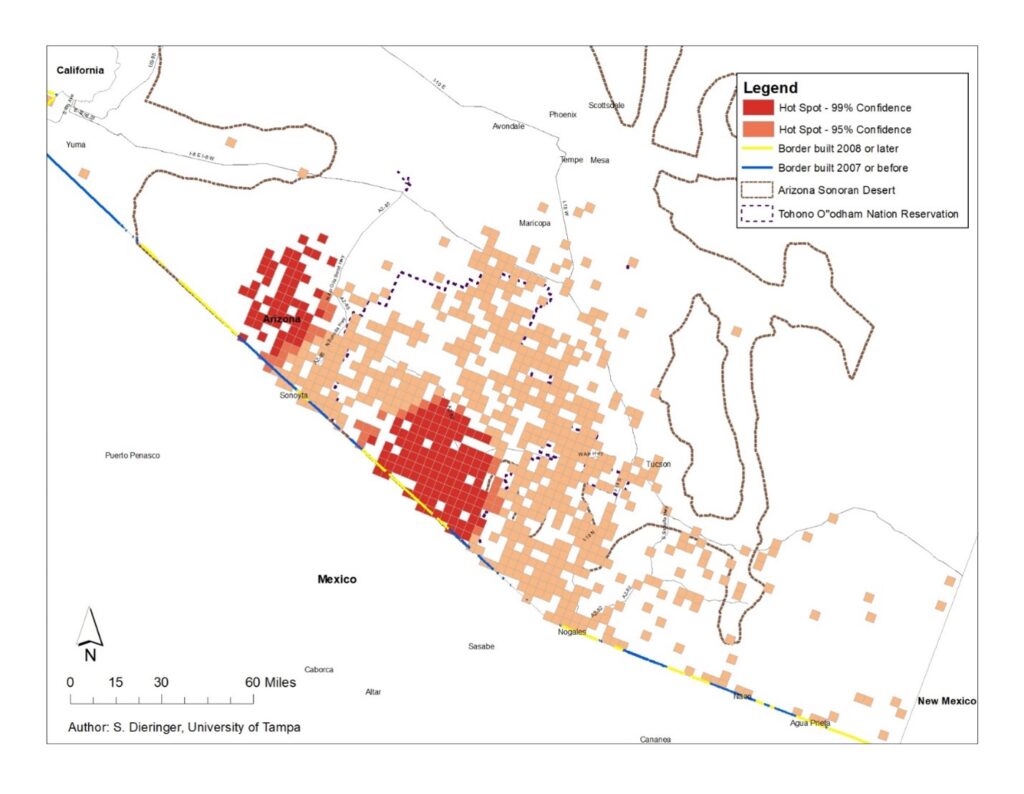
Barriers can split habitats and disrupt wildlife movement, especially where animals depend on routes that cross national borders. Peer-reviewed studies link border fences to habitat fragmentation, wildlife deaths, blocked access to food and water, and reduced dispersal and gene flow. These effects can interfere with migration routes and other ecological processes that extend across political boundaries. 1 (see Figure 2)
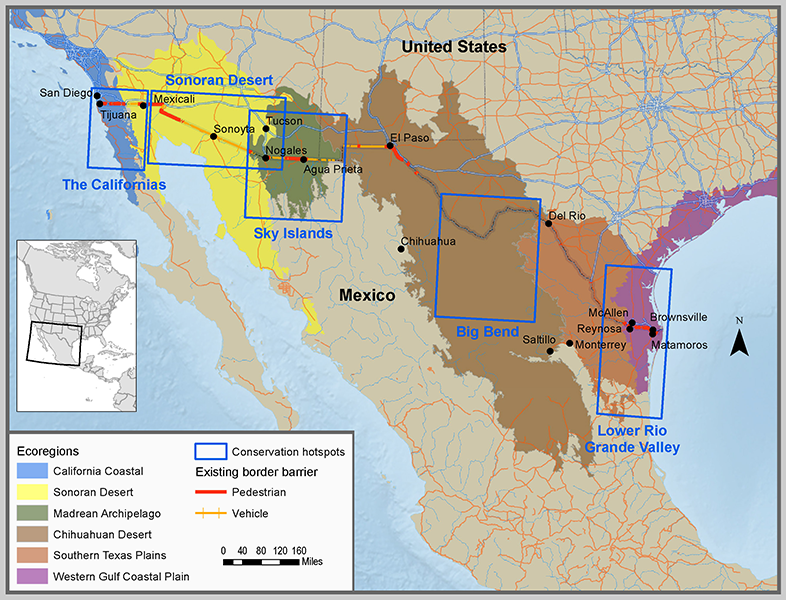
Construction can add a separate layer of harm. Government reviews and field reports have documented vegetation removal, soil disturbance, new access roads and damage to protected landscapes, including refuges. In areas where restoration has taken decades, even damage that can partly be repaired may represent a major loss of conservation work and time. 2 (see Figure 1)
The security gains may also be more limited than broad policy claims suggest. Research reviews and economic studies find that fencing can reduce unauthorized crossings at the places where it is built. But they also report that migrants may shift to other routes, leaving uncertainty about how large and lasting the overall deterrent effect is. A land barrier cannot address visa overstays, which the cited analysis identifies as a substantial part of unauthorized immigration. Local reductions in crossings therefore do not necessarily equal a comparable reduction in the wider problem. 3
There are possible unintended consequences as well. Route changes can push migrants into more remote and dangerous terrain, and the cited studies report increases in danger or deaths. That evidence is weaker than the research documenting ecological fragmentation, but it suggests that barriers may sometimes shift costs rather than remove them. 4
The case against
The central objection is that documented ecological harm does not prove that it outweighs security benefits in every project. Economic research and research syntheses find that physical barriers can reduce unauthorized migration at particular locations. That is a real benefit, even though its size and durability remain disputed. 5
Environmental effects also depend heavily on where and how a barrier is built. Wildlife-friendly designs, gates, gaps, terrain and route alignment can determine whether animals are blocked from moving or reaching essential resources. Some construction damage may also be repairable. Severe effects found in one protected habitat therefore cannot automatically be applied to every environmentally sensitive location. 6
The comparison itself remains difficult. Ecological harms are documented through wildlife-movement studies, mortality records and habitat assessments, while security effects are generally measured through local changes in crossings and estimates of route displacement. Few studies place long-term biodiversity loss, restoration prospects and security gains on the same scale or over the same period.
The bottom line
The evidence favours the claim, but only conditionally and with moderate confidence. It provides stronger direct support for the existence and seriousness of ecological damage—particularly fragmentation, blocked movement and construction impacts—than for the broader conclusion that those harms outweigh security benefits everywhere.
The claim is most persuasive where a wall cuts through high-value habitat or a critical wildlife corridor and causes lasting fragmentation. The counterargument is stronger where fencing produces clear security gains and careful design or placement can substantially reduce environmental damage.
The main uncertainty is not whether walls can harm ecosystems or sometimes deter crossings. Both can happen. The unresolved question is how to weigh site-specific ecological losses against site-specific security gains and available alternatives. On the current evidence, ecological harm is more likely than not to outweigh security benefits in some sensitive locations, but the claim is not established as a universal judgment.
Pros — Supporting Arguments
Cons — Opposing Arguments
Figures & data

All contributions are reviewed for clarity, balance, and evidence. The strongest insights are elevated into the argument graph — with credit to you.
Help improve this analysis →