Increased book bans in public libraries and schools threaten intellectual freedom
What's this about?
People disagree about whether more book bans in schools and public libraries harm intellectual freedom (the chance to explore many ideas). Recent evidence shows a large rise in limits on books.
What supporters say
- Schools and libraries limit access to ideas when they remove books because leaders dislike their views.
- A Supreme Court case said school leaders should not remove books only because they dislike their ideas.
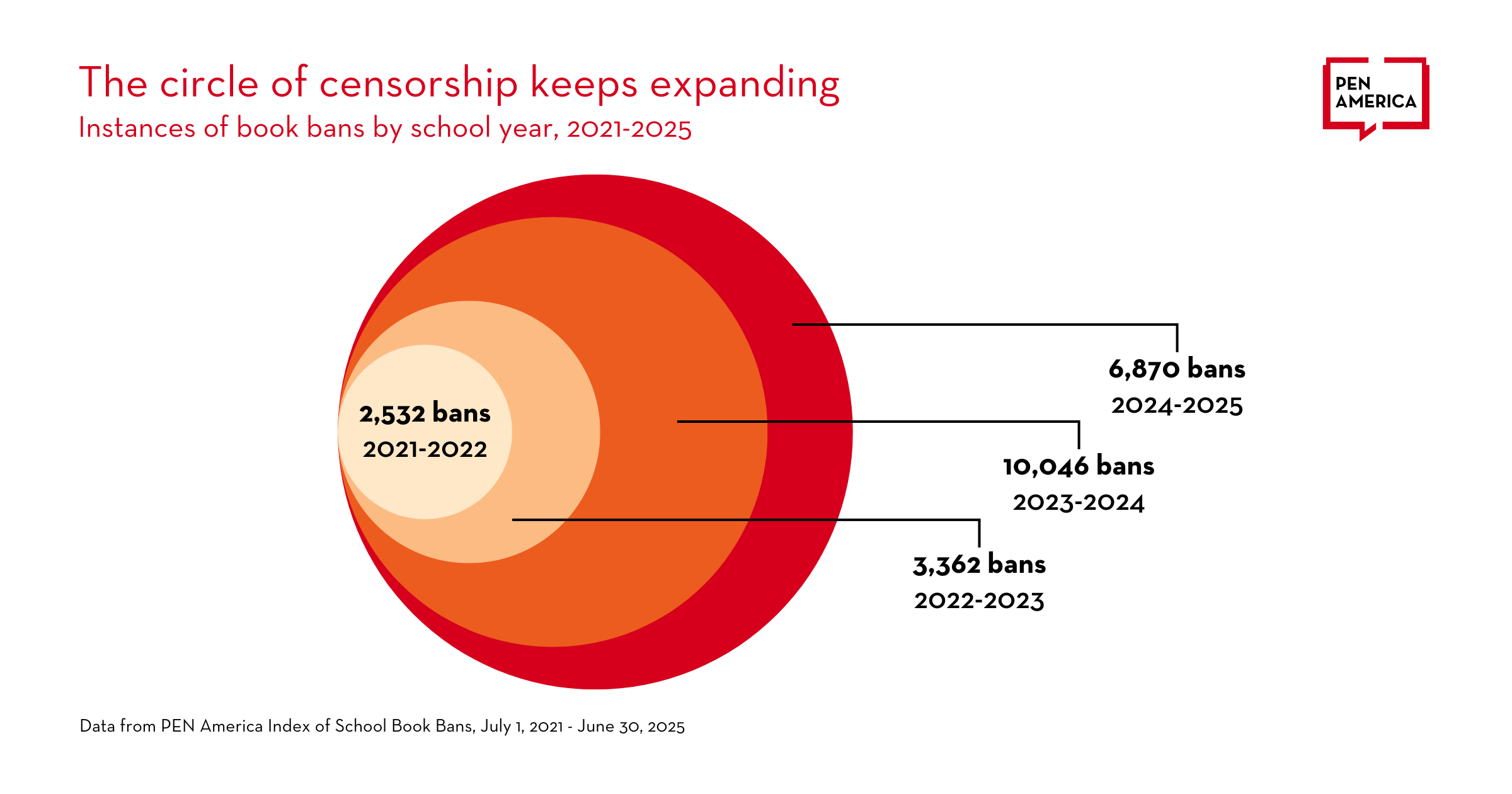
- PEN America counted over 10,000 school book limits in 2023–24, almost three times the year before.
- Many targeted books discuss race, racism, gender, or LGBTQ+ people, which raises fears of unfair targeting.
What critics say
- Not every book dispute counts as censorship, especially when adults set age limits for younger children.
- Schools and libraries can use fair rules when they choose books for their shelves.
- Different groups count book limits in different ways, so their totals do not match exactly.
- The Supreme Court case left some legal questions open, so the rules remain unclear in some cases.
The bottom line
The evidence shows that book limits have risen a lot and can harm intellectual freedom. The pattern of targeted books gives strong reason for concern, even though some age limits may be fair.
The recent rise in challenges, restrictions and removals of books from public schools and libraries poses a meaningful threat to intellectual freedom, the evidence suggests. That does not mean every disputed book or age-based limit is censorship, but the scale and pattern of recent action raise serious concerns about access to ideas.
The case for
At its core, intellectual freedom means people can encounter a wide range of ideas. When a school board or library removes books because officials dislike their message or viewpoint, it directly limits that access 1. The Supreme Court has also signaled concern about this issue: in *Island Trees School District v. Pico*, a divided court said school officials may not remove library books simply because they disagree with the ideas in them, although the ruling left important legal questions open.
The number of reported restrictions has increased sharply. PEN America recorded more than 10,000 instances of school book bans during the 2023–24 school year, nearly three times the prior year’s figure. Its count includes reported removals and restrictions, not just distinct titles (see Figure 1). Separately, the American Library Association reported a record number of unique titles challenged or restricted in libraries in 2023 (see Figure 2). The two systems measure somewhat different things, but together they point to a substantial rise in pressure on books 2.
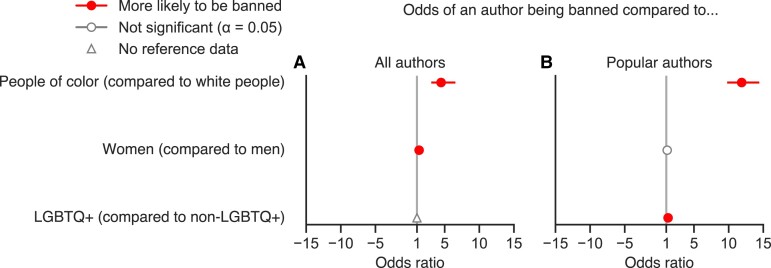
The books involved also matter. A peer-reviewed study found that school book bans were concentrated in particular geographic and political areas, and that the titles singled out were disproportionately about race, racism, gender and LGBTQ+ identities (see Figure 3). That pattern strengthens the concern that at least some restrictions are driven by viewpoint or identity, rather than by neutral collection standards 3. Repeatedly taking such books out of reach can leave students from marginalized groups with fewer opportunities to see their lives reflected in the collection, while limiting other students’ ability to understand those communities 5.
The effect may go beyond books formally removed from shelves. Educators have reported that controversy over books can reduce their professional independence, worsen the school climate and make them less willing to teach disputed subjects. Research on school-library collection decisions has likewise identified self-censorship as a route through which access can shrink before anyone files a formal challenge or votes on a ban 4.
The case against
Not every book removal is an ideological ban. Schools and libraries must make routine choices about what to buy, retain and make available to different age groups. Public schools in particular have legitimate discretion over curricula and collections, and any decision should be judged by its reason, process and real-world reach—not simply by whether a title was challenged or moved 6.
Parents also have a legitimate interest in what materials are available to minors. Surveys show some parents favor restrictions or systems that give them individual control over their own children’s access, though views vary depending on the setting and the material involved 7. Such surveys do not show that books should be removed for everyone, nor do they measure the effects on intellectual freedom.
A challenge, moreover, is not automatically a ban. Transparent review procedures can allow parents and community members to raise concerns while preserving access. But a formal review process alone does not guarantee a fair, viewpoint-neutral result.
There are also limits to the available data. Tracking groups use different definitions—counting challenges, restrictions, removals, instances or unique titles—and rely on reported events. Their totals may include temporary restrictions, duplicate reports or incomplete information. As a result, the evidence cannot determine the exact number, duration or motive behind every action.
The bottom line
The evidence supports the claim with high confidence: the sharp rise in reported restrictions, the frequent targeting of identity-related books and the legal concern over viewpoint-based removals together show a substantial risk to intellectual freedom.
The strongest uncertainty is not whether access to ideas can be harmed, but how many reported cases were truly viewpoint-based, how long restrictions lasted and what their longer-term effects are. Existing research does not establish broad causal effects on reading achievement, civic knowledge or mental health. Still, the access concerns are clear enough that schools and libraries should use case-by-case, transparent and viewpoint-neutral procedures—and preserve meaningful access wherever possible.
Pros — Supporting Arguments
Cons — Opposing Arguments
Figures & data

All contributions are reviewed for clarity, balance, and evidence. The strongest insights are elevated into the argument graph — with credit to you.
Help improve this analysis →