Digital automation caused manufacturing employment rates to decline in Country X after 2010
What's this about?
People disagree about whether digital automation caused Country X’s factory job rate to fall after 2010.
Digital automation means machines or computer tools doing work that people once did.
What supporters say
- Machines can take over some factory tasks, so factories may need fewer workers.
- More factories began using robots after 2010, especially in car and electronics plants.
What critics say
- Machines can also help factories make more goods, which may create other jobs.
- Foreign imports can hurt factory jobs when companies move work elsewhere or buy fewer local goods.
How to read this
The number of points on each side does not show who is right; stronger evidence matters more.
The bottom line
Automation could have helped cause Country X’s factory job decline.
But we are not sure it caused most of the fall, because other causes also fit the facts.
The claim is that digital automation caused Country X’s manufacturing employment rate to fall after 2010. The available evidence makes automation a plausible contributor, but does not establish that it was the main cause of the country’s decline.
The case for
Automation can clearly displace workers in some manufacturing settings. Studies from the United States have found that areas more exposed to industrial robots experienced lower employment and wages, while research on German manufacturing found job losses among existing manufacturing workers. These studies support a credible mechanism: when machines take over production tasks, factories may need fewer workers. 1
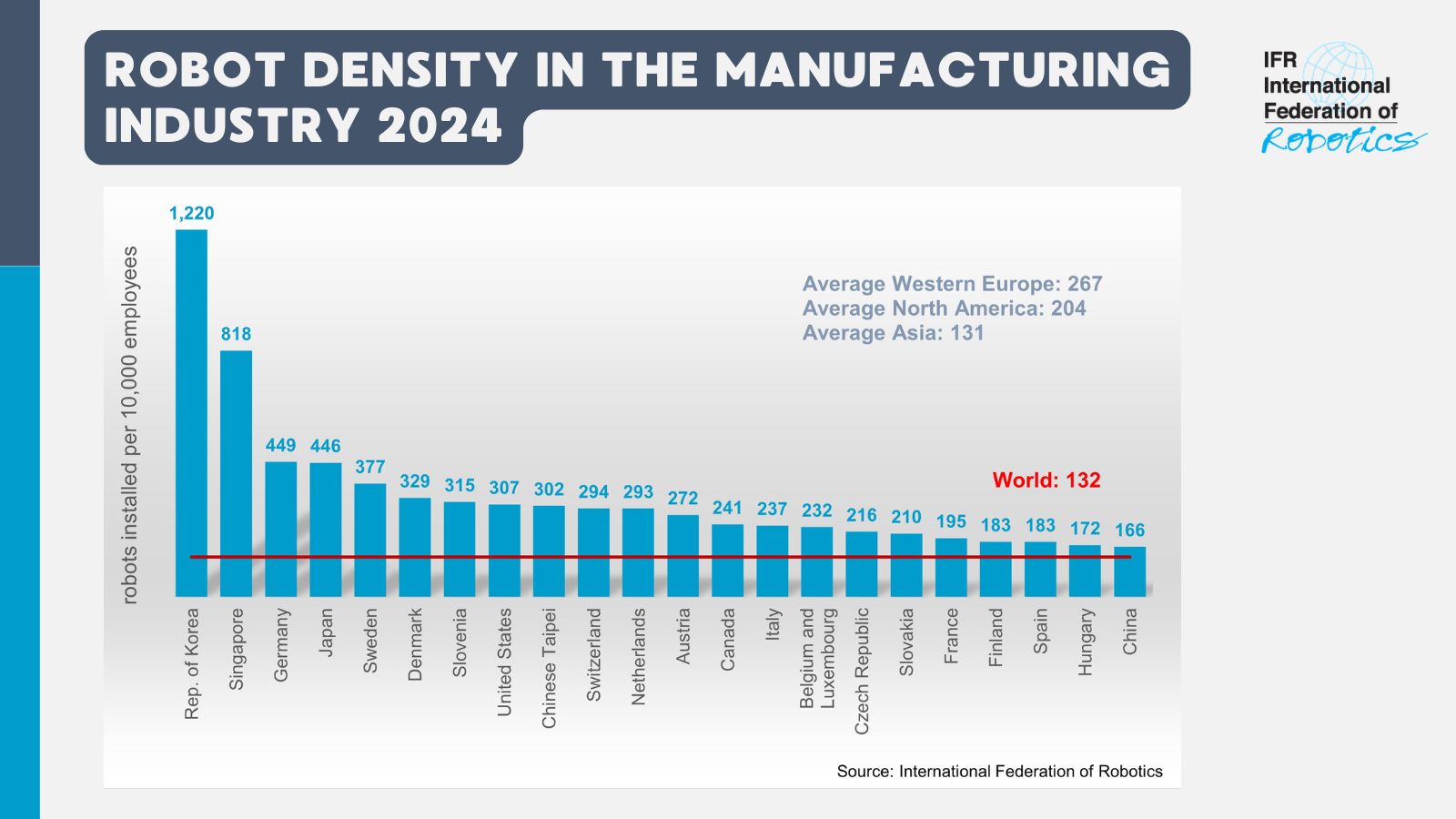
The timing also fits the claim. Industrial-robot installations grew substantially after 2010, especially in automobile and electronics manufacturing. International industry research likewise finds that automation can reduce demand for workers performing tasks that machines can replace, even when higher productivity and increased production offset some of the losses. 2
That evidence makes it reasonable to view automation as a possible part of Country X’s story. But it is strongest in showing that automation can cause manufacturing displacement, not that it caused the particular change in Country X’s employment rate. The available record does not provide a country-specific analysis linking automation exposure to the post-2010 decline.
The case against
The biggest problem is attribution. Manufacturing employment has also been hit by import competition, offshoring, productivity growth, exchange-rate changes, falling investment-good prices and shifts between sectors. Studies of trade exposure, in particular, find large and lasting manufacturing job losses in areas facing stronger import competition. Without accounting for these forces, the timing of increased automation does not show that it caused the decline. 3 (see Figure 2)
The claim also depends on what “manufacturing employment rate” means. Automation may eliminate jobs for existing manufacturing workers while displaced workers move into services or other industries. In that case, manufacturing employment could fall without causing a comparable decline in overall national employment. OECD research similarly finds that automation often changes occupations rather than eliminating them entirely, with the outcome shaped by economic institutions and the structure of each country. 4
Automation’s overall effect is therefore not automatically negative. Machines can reduce the number of workers needed for each unit of output, but they can also lower costs, raise productivity, expand production and create demand for complementary work. Research finds different effects across industries and countries, while reviews warn that it is difficult to identify the impact of robots on total employment. Evidence that jobs contain automatable tasks is not the same as evidence that those jobs were actually lost.
Important details are also unresolved, including the rate’s denominator, which industries count as manufacturing, how digital automation is measured and what the relevant comparison period is. The record lacks a Country X time series, a sector-level measure of automation exposure, a comparison group and controls for trade and other shocks.
The bottom line
The evidence does not establish that digital automation caused Country X’s manufacturing employment rate to decline after 2010. It supports automation as a plausible contributing mechanism, with meaningful evidence that robots can displace manufacturing workers in some places. But the evidence linking that mechanism to Country X’s specific outcome is weaker.
The strongest objections concern attribution to automation rather than trade or other changes, and the possibility that workers moved into other sectors instead of disappearing from employment altogether. Overall, the evidence moderately favors a qualified conclusion: automation may have played a role, but the claim that it was the cause of the decline remains unresolved. (see Figure 4)
Pros — Supporting Arguments
Figures & data

All contributions are reviewed for clarity, balance, and evidence. The strongest insights are elevated into the argument graph — with credit to you.
Help improve this analysis →