A six-month Strait of Hormuz closure would cause a 30% oil-price rise and major recessions
What's this about?
People disagree about whether a six-month Strait of Hormuz closure would raise oil prices by 30% and cause major world-wide recessions.
What supporters say
- Hormuz carries so much oil that a long closure could cause a severe world oil shock.
- A long break in supply could last beyond quick fixes, such as stored oil or new ship routes.
What critics say
- A world-wide closure would not cause major recessions in every country.
- The evidence does not prove that oil prices would rise by exactly 30%.
How to read this
The number of points on each side does not show who is right; stronger evidence matters more.
The bottom line
A six-month closure would probably cause a serious oil shock and harm many countries. But the evidence does not prove a 30% price rise or major recessions everywhere.
A six-month closure of the Strait of Hormuz would probably cause a serious global oil shock. But the available evidence does not establish the claim’s precise forecast of a 30% price increase followed by major recessions across the world.
The case for
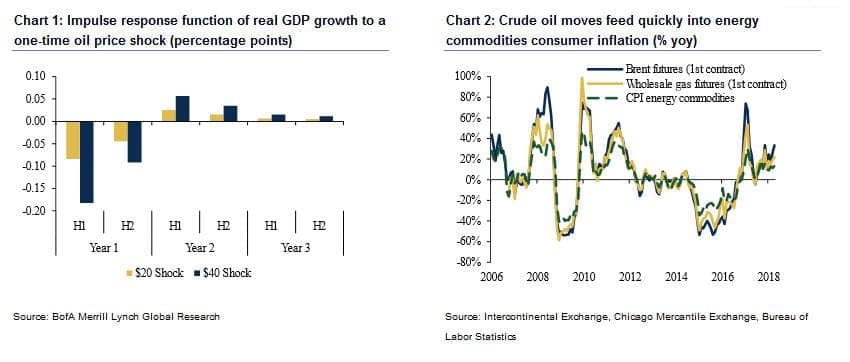
The Strait of Hormuz is one of the world’s most important oil routes. A genuine, sustained closure would interrupt a large volume of petroleum shipments and could create severe pressure in global markets. Research on major supply disruptions links prolonged lost oil supply with sharp price increases and economic damage. 1 (see Figure 2)
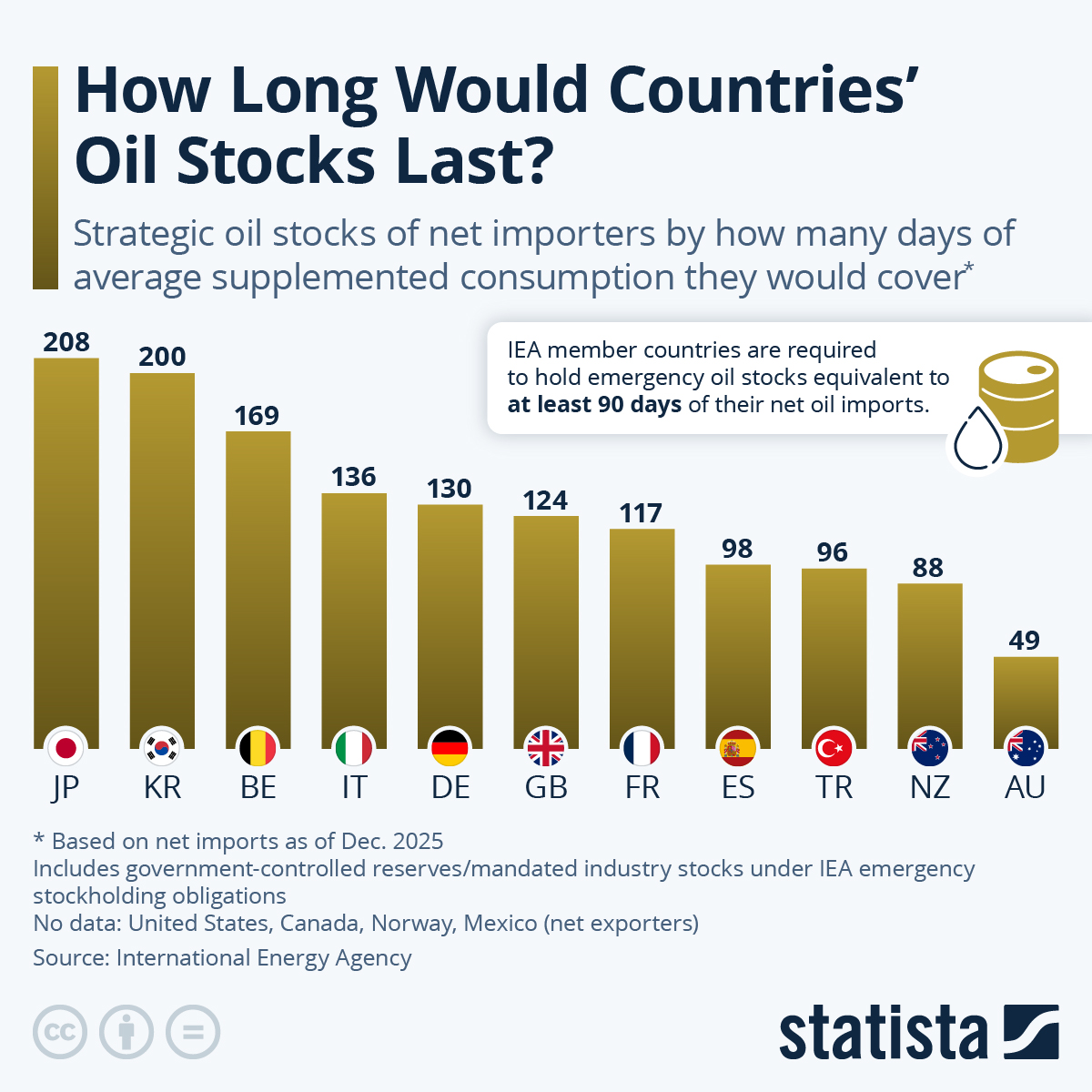
Oil-price shocks generally hurt countries that import more energy than they export. A six-month disruption would also last long enough to test the ability of emergency reserves, alternate shipping routes and other supply responses to cushion the blow. Inventories can delay or soften the effects, but their success depends on how much oil is available and how quickly governments release it. A long interruption could therefore leave markets under pressure even after some emergency measures began. (see Figure 3)
The disruption could spread beyond crude prices. Rerouted shipping, higher transport costs and wider trade problems could affect businesses and consumers in importing economies. Under the most severe scenario—an almost complete blockade with little successful rerouting—the result could be an extreme oil shock and broad recessionary effects. 2
The case against
The evidence does not support 30% as a reliable or established forecast. A closure would not necessarily remove every barrel that normally passes through Hormuz. Bypass pipelines and other routes could keep some supplies moving, while reserves, spare production, weaker demand and changes in market expectations could reduce the impact.
The final price increase would depend on several uncertain factors: how much oil was actually lost, how much spare capacity producers could provide, how quickly reserves were released, and how consumers and companies adjusted. Existing research and scenario studies discuss these possibilities, but they do not combine them into a tested Hormuz-specific model that predicts a 30% rise. 3
The recession claim is even less certain. Oil-price increases do not affect every country in the same way. Importers generally face higher costs, while exporters may benefit from increased revenues. The effects also vary with energy use, monetary policy, exchange rates, economic structure and the type of disruption. Historical oil shocks have often weakened growth, but they have not automatically caused a major recession in every economy. 4 (see Figure 4)
A partial closure, successful rerouting, coordinated reserve releases or a rapid increase in production could substantially reduce the damage. The available record includes government data, economic research and scenario analyses, but it does not translate one specific six-month closure into a universal recession forecast.
The bottom line
The evidence strongly supports the underlying warning: a real six-month Hormuz closure would pose a major risk to oil markets and the global economy. It could produce sharp price increases and significant harm, particularly for oil-importing countries.
But the evidence is much weaker for the claim’s exact numbers and broad conclusion. A 30% rise is not established, and “major recessions” would not necessarily occur everywhere. The outcome would depend mainly on the share of oil flows actually lost and on the responses of producers, governments, traders, inventories and consumers.
The claim is therefore best treated as a severe-risk scenario, not a validated forecast. It would be more credible if the 30% figure were presented as one possible range or illustration, and if the recession warning focused on specified importing economies under clearly stated assumptions.
Figures & data

All contributions are reviewed for clarity, balance, and evidence. The strongest insights are elevated into the argument graph — with credit to you.
Help improve this analysis →